| In the autumn of 2019, shortly after I had moved to Brazil, the Amazon began to burn. Fires rage through the forest every year — but this season was different. The world noticed. Viral campaigns ripped through social media. It became the biggest political scandal that newly elected President Jair Bolsonaro had faced up until that point. The question we all had was what was driving all of this destruction and deforestation in the Amazon. I assumed it was logging, but I was wrong. The Amazon is so massive — encompassing a territory larger than western Europe — that the only way to truly appreciate its dimensions are from space. Satellite imagery is how you can see how much deforestation has changed it in recent decades and, if you get close enough, who is responsible. Cattle ranching is driving the Amazon's deforestation. In the story we published this week, we zoomed in on the cattle ranches themselves: farms that have been cited federal embargoes for deforestation — and should have been blocked from supplying cattle to the biggest meat producers in the country. But the satellite imagery we obtained from the geospatial company Maxar Technologies provided a different picture: The farms were still very much active. The satellite imagery became a forensics file of what authorities call illegal cattle grazing — a key reason why more of the Amazon is lost every year. The forest is razed. Then the cows come in. We beamed down onto the rural city of Santa Cruz do Xingu, home to 2,700 people and 127,000 cattle, where many farms have been cited by authorities for illegal deforestation. Here, we focused on several farms that are in the indirect supply chains of meatpacking plants authorized to ship to the United States. In areas cited and embargoed by authorities for deforestation, there they were: cattle. They milled around an expansive open field that had been deforested. They clustered in groups or wandered by themselves. In another embargoed area, which should be stripped of commercial activity, we see ranching structures. Then beyond, more cattle — white bright dots speckled across green fields. But this revelation was only one finding of an investigation reported over 18 months. What happens when the beef finally reaches the United States, the world's second largest importer, is just as surprising. Read our story to find out. 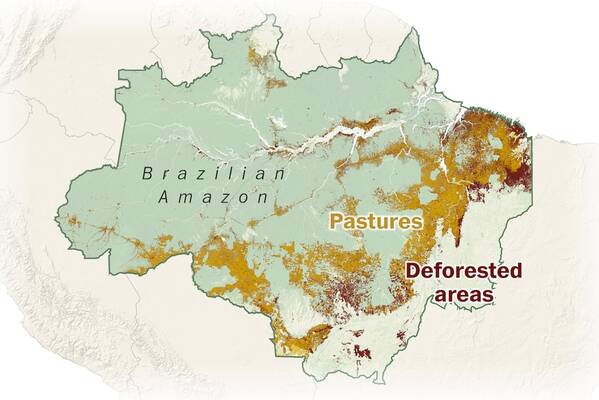 (Júlia Ledur/The Washington Post) If the Amazon dies, beef will be the killer. And America will be an accomplice. By Terrence McCoy and Júlia Ledur ● Read more » |    | | | | Oligarchs and financial officials are alarmed over the economic toll it's taking and feel powerless to influence Putin. Exclusive ● By Catherine Belton and Greg Miller ● Read more » | | | | | The emergence of new accusations against Dodgers pitcher Trevor Bauer is the latest chapter in MLB's nearly year-long effort to gain control of a scandal like none it has previously faced. Exclusive ● By Gus Garcia-Roberts ● Read more » | | | | Why do opponents say they want to ban titles like "Gender Queer," "The 1619 Project," and "Maus"? By Laura Meckler and Perry Stein ● Read more » | | | | | Statistics unveiled in the medical journal JAMA Surgery offer one of the first attempts to measure the toll of injury and death resulting from falls along new sections of the wall. By Nick Miroff ● Read more » | | | | Experts say numbers show importance of boosters — and the risks the most vulnerable still face Fenit Nirappil and Dan Keating ● Read more » | | | | | 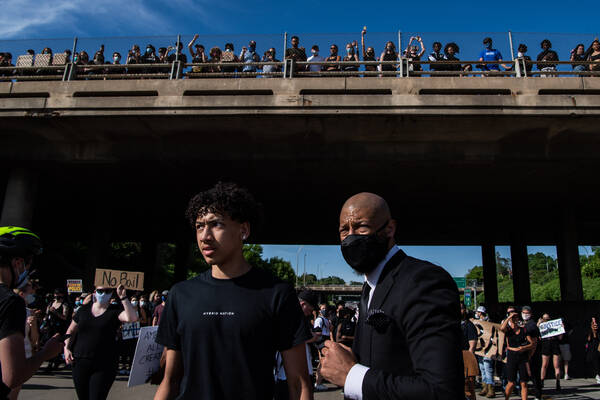 (Salwan Georges/The Washington Post) Not long ago, he was known for battling the NBA over its mental health policy and protesting police brutality. Now, with prodding from Steve Bannon, Royce White is running for congress as a far-right populist. By David Gardner ● Read more » | | | | | | Spectators assemble early each morning to get a coveted wristband to watch testimony in the contentious Johnny Depp-Amber Heard defamation trial. Most are there to support him, but not all. By Emily Yahr ● Read more » | | | | | | The town estimates it is more than 80 percent of the way toward achieving its goal of becoming totally carbon neutral. By Michelle Ye Hee Lee and Julia Mio Inuma ● Read more » | | | | | 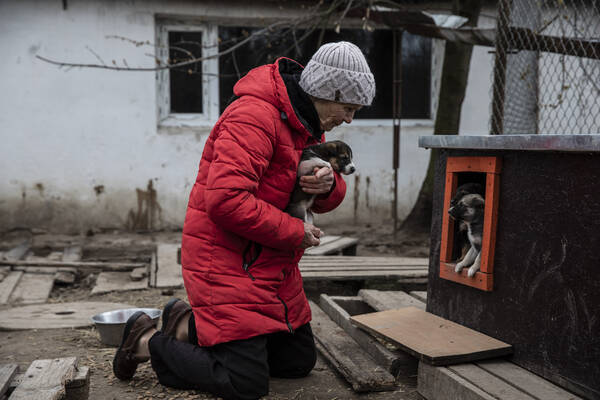 (Heidi Levine for The Washington Post) As Russian tanks neared Kyiv, and residents fled surrounding suburbs, Asya Serpinska ran toward the animal shelter she has kept going for two decades. By Louisa Loveluck, Kostiantyn Khudov, Joyce Koh and Heidi Levine ● Read more » | | | | | |
Photo of the week 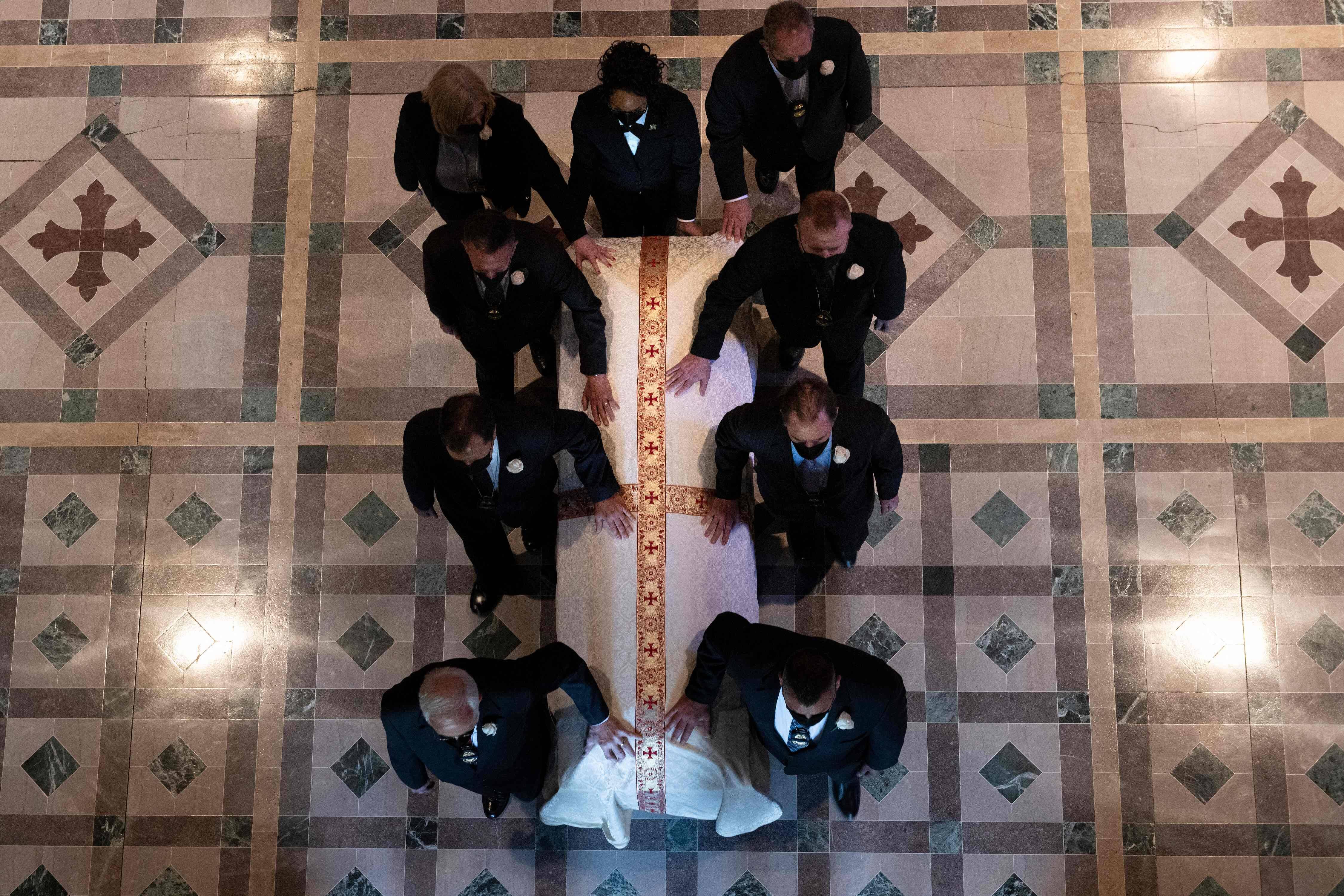 (Brendan Smialowski/AFP/Getty Images) | The funeral of Madeleine Albright, the nation's first female secretary of state, drew leaders of both parties on Wednesday. She was honored as a woman of principles that are now under siege at home and abroad.
When President Biden learned of her death, he was in the air, on his way to Europe to try to help persuade allies to remain unified in the face of Russia's invasion of Ukraine. "It was not lost on me that Madeleine was a big part of the reason NATO was still strong, and galvanized, as it is today," Biden said at the funeral. Above, Albright's casket is escorted from Washington National Cathedral following the ceremony. |





 Email
Email 



No comments:
Post a Comment