Mises Wire |
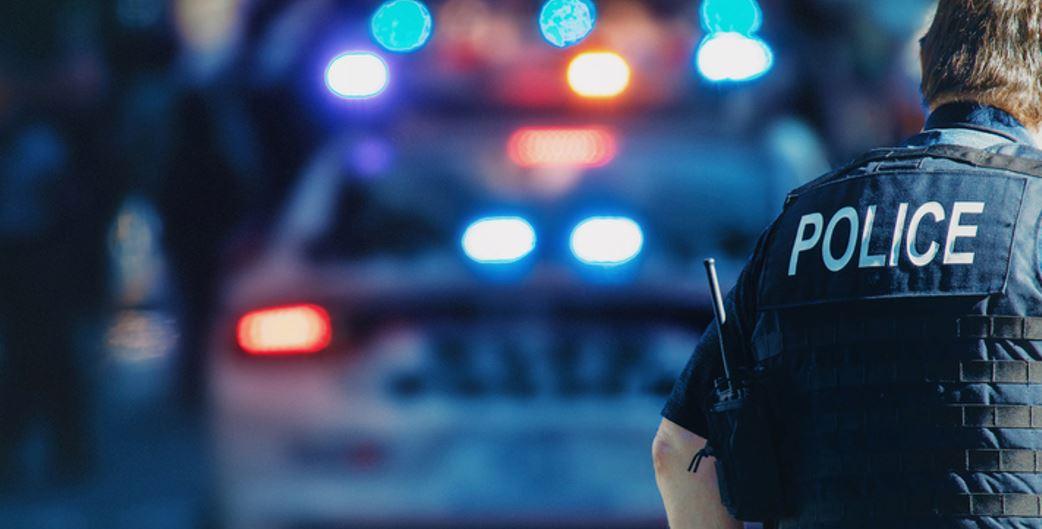
| Uvalde's Biggest Mistake Was Trusting the Police to "Keep Us Safe" Posted: 30 May 2022 12:15 PM PDT The Uvalde police have helped demonstrate, yet again, what has long been clear: when you're facing a maniac with a gun, don't count on the government's uniformed bureaucrats with badges to help you. As we learned this week, not even a child begging for help on a 911 call will get the police to confront a shooter. Moreover, given the lack of competence and effort consistently displayed by police in cases where they face real danger—as at Columbine, Parkland, and Uvalde—it's clearly a matter of chance as to whether the local police in whatever town are willing to risk "officer safety" for the sake of public safety. Contrary to what gun control advocates think, this reality sends a powerful message against gun control: we can't trust the government's armed enforcers to provide any measure of safety, and we absolutely need a right to private self-defense, to private security, and accountable trained professionals who are not the bloated, overpaid, branch of the government bureaucracy known as "law enforcement." "Back the Blue" Plays into the Hands of Gun Control AdvocatesWhen it comes to evaluating the disastrous police cowardice and incompetence in Uvalde's Robb Elementary last week, those who blindly defend the police are essentially making the same argument as those as those who want to destroy the right to private self defense: "the police did as much as they could, but a single untrained teenager with a gun is just too much to handle for 20 or more trained police officers who are armed to the teeth." For gun controllers, the takeaway from this is "see, these guns are so powerful, the cops were left impotent in Uvalde." The police defenders can only shrug and admit the same thing: "our heroic men and women did all they could do! That guy was just too tough, fast, and smart for us!" This sends a message to casual observers of the gun debate—which is most of the public. It suggests those "assault rifles" the Left is always talking about are really "weapons of war", and allow a single person to outgun an entire police force. Many people will ask themselves: why would any person need such a thing? But what retort can the police defenders offer to this? It seems they can only repeat something about how our selfless heroes are beyond criticism and that we should trust keep trusting the regime, its police, and its schools to "keep us safe." Meanwhile, gun control advocates are mocking the old conservative line that "a good guy with a gun stops a bad guy with a gun." It's difficult to mount an effective response to this if one is committed to the idea that the Uvalde police were even remotely competent or conscientious in their work. If it's true that Uvalde police were in any way doing their best, then an entire department of "good guys with guns" could truly do nothing to stop one person with an AR-15. The reality, however, is that the Uvalde police were most certainly not "good guys with guns." They are cowards clad in impressive looking taxpayer-funded gear who made the situation worse. As their own supervisors admit, they sat around waiting for backup because had they actually tried to stop the shooter, the police "could've been shot." The police at Uvalde were not just useless in terms of public safety. They actively got in the way of public safety. When a group of parents—some of whom were likely armed—attempted to intervene in the school themselves, the police literally assaulted the parents. Witnesses report police at the scene tackling women, pepper spraying men, and drawing their tasers in order to further intimidate the parents. The police did this while the killer was rampaging inside the school. Naturally, the police, swaggering around in their cowboy hats and body armor, didn't like being shown up by the uppity private citizens of the town. Enforcing Gun Laws Also Requires "Good Guys with Guns"Repeated displays of incompetence from police agencies also calls into question the idea that these same bureaucrats could effectively enforce gun prohibition laws. A longstanding problem with prohibition—whether we're talking guns, drugs, or alcohol—is that it tends to be only effective in keeping prohibited objects out of the hands of relatively law-abiding citizens. But when it comes to real criminals, it's a very different story. In the case of drugs we've seen this many times over. Ordinary people often avoid drugs because they don't want to get in trouble with the law. The professional criminals are a totally different story, and law enforcement has never managed to keep committed drug runners from plying their trade. Similarly, it's easy for police to target ordinary law-abiding people when it comes to gun prohibition. These people are unlikely to buy or sell guns in the black market, or employ connections with illegal gun runners to get the guns they want. Thus, it's a safe bet that new gun prohibitions will disarm peaceful people, but it's not at all a safe bet that violent felons will be equally disarmed. Confronting depraved and violent criminals requires real work and real danger. Enforcing laws against those people ultimately requires "a good guy with a gun." When it comes to government police, however, we've seen at Uvalde and Parkland the quality of work we should expect. We've seen that when it comes to doing dangerous work, police are often uninterested. Gun control advocates are now highlighting police inaction when it comes to shootings like Uvalde. They think it helps their case. Yet the same people continue to cling to the unwarranted notion that police would be competent enforcers of gun laws. The fact is we have every reason to assume police will be often unreliable in both cases. The Right to Bear Arms Is Rooted in Opposition to Regime PowerIt's always an odd mix when advocates of the right to self-defense also profess to enthusiastically support government police. Historically, the philosophy behind private gun ownership has always been a philosophy of strong skepticism of a government's ability or inclination to "keep us safe." Certainly, in the late eighteenth century and throughout the nineteenth century, legal protections of gun ownership were rooted in the assumption that the governments' "public safety" personnel were inadequate to the keep the peace or provide safety. Local police forces were viewed as corrupt and as partisan hacks who served only elected officials and party machines. Professional military personnel were viewed as people who were too lazy to make a living through honest work. There was fear that granting greater military or policing power to the state would result in abuse of that power. This is why Americans before the twentieth century relied largely on private security and decentralized militias. Much of the debate revolved around the balance between private coercive power and the state's coercive power. It was understood that granting more of this power to government personnel necessarily decreased the relative strength of the private citizens' coercive power. That is, if the police are better funded and more well-armed than private citizens—this puts the private citizen at a disadvantage. The state, after all, is fundamentally built on the idea of securing a monopoly on the means of coercion. The more power given to the police, the more complete this monopoly becomes. Gun Control Tips the Balance Toward More Relative Power for Felons and for the RegimeOut of fear of private sector criminals, ordinary law-abiding people have repeatedly granted a stronger and stronger monopoly on coercion to governments over time. Police budgets are now immense, law enforcement agencies are flush with cash and fond of buying military-style equipment for use against the public. Adopting new gun control measures would further tip the balance toward greater government monopolies on coercion. But, given what we've seen from police in Uvalde, we have no reason to believe this ever-increasing enhancement of the state's power would actually translate into more public safety. Nevertheless, in the wake of the Uvalde massacre, NRA chief Wayne Lapierre was still beating the same old tired drum, claiming—contrary to all the evidence—that the nation's police departments need even more tax money. It's not surprising that this is the only "idea" they have to offer. When one's alleged commitment to private gun ownership is bundled with unqualified support for government police, it's impossible to argue the obvious: that private self defense is essential because the government has repeatedly shown it has little interest in providing public safety. Read More:
This posting includes an audio/video/photo media file: Download Now |
| Posted: 30 May 2022 12:00 PM PDT During the 1930s, the Rockefellers pushed hard for war against Japan, which they saw as competing with them vigorously for oil and rubber resources in Southeast Asia and as endangering the Rockefellers' cherished dreams of a mass "China market" for petroleum products. On the other hand, the Rockefellers took a noninterventionist position in Europe, where they had close financial ties with German firms such as I.G. Farben and Co., and very few close relations with Britain and France. The Morgans, in contrast, as usual deeply committed to their financial ties with Britain and France, once again plumped early for war with Germany, while their interest in the Far East had become minimal. Indeed, US ambassador to Japan Joseph C. Grew, former Morgan partner, was one of the few officials in the Roosevelt administration genuinely interested in peace with Japan. World War II might therefore be considered, from one point of view, as a coalition war: the Morgans got their war in Europe, the Rockefellers theirs in Asia. Such disgruntled Morgan men as Lewis W. Douglas and Dean G. Acheson (a protégé of Henry Stimson), who had left the early Roosevelt administration in disgust at its soft-money policies and economic nationalism, came happily roaring back into government service with the advent of World War II. Nelson A. Rockefeller, for his part, became head of Latin American activities during World War II, and thereby acquired his taste for government service. After World War II, the united Rockefeller–Morgan–Kuhn, Loeb eastern Establishment was not allowed to enjoy its financial and political supremacy unchallenged for long. "Cowboy" Sun Belt firms, maverick oil men and construction men from Texas, Florida, and southern California began to challenge the eastern Establishment "Yankees" for political power. While both groups favor the Cold War, the Cowboys are more nationalistic, more hawkish, and less inclined to worry about what our European allies are thinking. They are also much less inclined to bail out the now Rockefeller-controlled Chase Manhattan Bank and other Wall Street banks that loaned recklessly to Third World and Communist countries and expect the US taxpayer — through outright taxes or the printing of US dollars — to pick up the tab. It should be clear that the name of the political party in power is far less important than the particular regime's financial and banking connections. The foreign-policy power for so long of Nelson Rockefeller's personal foreign affairs adviser, Henry A. Kissinger, a discovery of the extraordinarily powerful Rockefeller–Chase Manhattan Bank elder statesman John J. McCloy, is testimony to the importance of financial power — as is the successful lobbying by Kissinger and Chase Manhattan's head, David Rockefeller, to induce Jimmy Carter to allow the ailing shah of Iran into the US — thus precipitating the humiliating hostage crisis. Despite differences in nuance, it is clear that Ronald Reagan's originally proclaimed challenge to Rockefeller-Morgan power in the Council of Foreign Relations (CFR) and to the Rockefeller-created Trilateral Commission has fizzled, and that the "permanent government" continues to rule regardless of the party nominally in power. As a result, the much-heralded "bipartisan-foreign-policy" consensus imposed by the Establishment since World War II seems to remain safely in place. David Rockefeller, chairman of the board of his family's Chase Manhattan Bank from 1970 until recently, established the Trilateral Commission in 1973, with the financial backing of the CFR and the Rockefeller Foundation. Joseph Kraft, syndicated Washington columnist who himself has the distinction of being both a CFR member and a Trilateralist, has accurately described the CFR as a "school for statesmen" that "comes close to being an organ of what C. Wright Mills has called the Power Elite — a group of men, similar in interest and outlook, shaping events from invulnerable positions behind the scenes." The idea of the Trilateral Commission was to internationalize policy formation, the commission consisting of a small group of multinational corporate leaders, politicians, and foreign-policy experts from the United States, Western Europe, and Japan, who meet to coordinate economic and foreign policy among their respective nations. Perhaps the most powerful single figure in foreign policy since World War II, a beloved adviser to all presidents, is the octogenarian John J. McCloy. During World War II, McCloy virtually ran the War Department as assistant to aging Secretary Stimson; it was McCloy who presided over the decision to round up all Japanese Americans and place them in concentration camps in World War II, and he is virtually the only American left who still justifies that action. Before and during the war, McCloy, a disciple of Morgan lawyer Stimson, moved in the Morgan orbit; his brother-in-law, John S. Zinsser, was on the board of directors of J.P. Morgan & Co. during the 1940s. But, reflecting the postwar power shift from Morgan to Rockefeller, McCloy moved quickly into the Rockefeller ambit. He became a partner of the Wall Street corporate law firm of Milbank, Tweed, Hope, Hadley & McCloy, which had long served the Rockefeller family and the Chase Bank as legal counsel. From there he moved to become chairman of the board of the Chase Manhattan Bank, a director of the Rockefeller Foundation, and of Rockefeller Center, Inc., and finally, from 1953 until 1970, chairman of the board of the Council on Foreign Relations. During the Truman administration, McCloy served as president of the World Bank and then US high commissioner for Germany. He was also a special adviser to President John F. Kennedy on disarmament, and chairman of Kennedy's Coordinating Committee on the Cuban Crisis. It was McCloy who "discovered" Professor Henry A. Kissinger for the Rockefeller forces. It is no wonder that John K. Galbraith and Richard Rovere have dubbed McCloy "Mr. Establishment." A glance at foreign-policy leaders since World War II will reveal the domination of the banker elite. Truman's first secretary of defense was James V. Forrestal, former president of the investment banking firm of Dillon, Read & Co., closely allied to the Rockefeller financial group. Forrestal had also been a board member of the Chase Securities Corporation, an affiliate of the Chase National Bank. Another Truman defense secretary was Robert A. Lovett, a partner of the powerful New York investment banking house of Brown Brothers Harriman. At the same time that he was secretary of defense, Lovert continued to be a trustee of the Rockefeller Foundation. Secretary of the Air Force Thomas K. Finletter was a top Wall Street corporate lawyer and member of the board of the CFR while serving in the cabinet. Ambassador to Soviet Russia, ambassador to Great Britain, and secretary of commerce in the Truman administration was the powerful multimillionaire W. Averell Harriman, an often-underrated but dominant force with the Democratic Party since the days of FDR. Harriman was a partner of Brown Brothers Harriman. Also ambassador to Great Britain under Truman was Lewis W. Douglas, brother-in-law of John J. McCloy, a trustee of the Rockefeller Foundation, and a board member of the Council on Foreign Relations. Following Douglas as ambassador to the Court of St. James was Walter S. Gifford, chairman of the board of AT&T, and member of the board of trustees of the Rockefeller Foundation for almost two decades. Ambassador to NATO under Truman was William H. Draper Jr., vice president of Dillon, Read & Co. Also influential in helping the Truman administration organize the Cold War was director of the policy-planning staff of the State Department, Paul H. Nitze. Nitze, whose wife was a member of the Pratt family, associated with the Rockefeller family since the origins of Standard Oil, had been vice president of Dillon, Read & Co. When Truman entered the Korean War, he created an Office of Defense Mobilization to run the domestic economy during the war. The first director was Charles E. ("Electric Charlie") Wilson, president of the Morgan-controlled General Electric Company, who also served as board member of the Morgans' Guaranty Trust Company. His two most influential assistants were Sidney J. Weinberg, ubiquitous senior partner in the Wall Street investment-banking firm of Goldman Sachs & Co., and former general Lucius D. Clay, chairman of the board of Continental Can Co., and a director of the Lehman Corporation. Succeeding McCloy as president of the World Bank, and continuing in that post throughout the two terms of Dwight Eisenhower, was Eugene Black. Black had served for 14 years as vice president of the Chase National Bank, and was persuaded to take the World Bank post by the bank's chairman of the board, Winthrop W. Aldrich, brother-in-law of John D. Rockefeller, Jr. The Eisenhower administration proved to be a field day for the Rockefeller interests. While president of Columbia University, Eisenhower was invited to high-level dinners where he met and was groomed for president by top leaders from the Rockefeller and Morgan ambits, including the chairman of the board of Rockefeller's Standard Oil of New Jersey, the presidents of six other big oil companies, including Standard of California and Socony-Vacuum, and the executive vice president of J.P. Morgan & Co. One dinner was hosted by Clarence Dillon, the multimillionaire retired founder of Dillon, Read & Co., where the guests included Russell B. Leffingwell, chairman of the board of both J.P. Morgan & Co. and the CFR (before McCloy); John M. Schiff, a senior partner of the investment-banking house of Kuhn, Loeb & Co.; the financier Jeremiah Milbank, a director of the Chase Manhattan Bank; and John D. Rockefeller, Jr. Even earlier, during 1949, Eisenhower had been introduced through a special study group to key figures in the CFR. The study group devised a plan to create a new organization called the American Assembly — in essence an expanded CFR study group — whose main function was reputedly to build up Eisenhower's prospects for the presidency. A leader of the "Citizens for Eisenhower" committee, who later became Ike's ambassador to Great Britain, was the multimillionaire John Hay Whitney, scion of several wealthy families, whose granduncle, Oliver H. Payne, had been one of the associates of John D. Rockefeller, Sr. in founding the Standard Oil Company. Whitney was head of his own investment concern, J.H. Whitney & Co., and later became publisher of the New York Herald Tribune. Running foreign policy during the Eisenhower administration was the Dulles family, led by Secretary of State John Foster Dulles, who had also concluded the US peace treaty with Japan under Harry Truman. Dulles had for three decades been a senior partner of the top Wall Street corporate-law firm of Sullivan & Cromwell, whose most important client was Rockefeller's Standard Oil Company of New Jersey. Dulles had been for 15 years a member of the board of the Rockefeller Foundation, and before assuming the post of Secretary of State was chairman of the board of that institution. Most important is the little-known fact that Dulles's wife was Janet Pomeroy Avery, a first cousin of John D. Rockefeller Jr. Heading the supersecret Central Intelligence Agency during the Eisenhower years was Dulles's brother, Allen Welsh Dulles, also a partner in Sullivan & Cromwell. Allen Dulles had long been a trustee of the CFR and had served as its president from 1947 to 1951. Their sister, Eleanor Lansing Dulles, was head of the Berlin desk of the State Department during that decade. Undersecretary of State, and the man who succeeded John Foster Dulles in the spring 1959, was former Massachusetts governor Christian A. Herter. Herter's wife, like Nitze's, was a member of the Pratt family. Indeed, his wife's uncle, Herbert L. Pratt, had been for many years president or chairman of the board of Standard Oil Company of New York. One of Mrs. Herter's cousins, Richardson Pratt, had served as assistant treasurer of Standard Oil of New Jersey up to 1945. Furthermore, one of Herter's own uncles, a physician, had been for many years treasurer of the Rockefeller Institute for Medical Research. Herter was succeeded as Undersecretary of State by Eisenhower's ambassador to France, C. Douglas Dillon, son of Clarence, and himself chairman of the Board of Dillon, Read & Co. Dillon was soon to become a trustee of the Rockefeller Foundation. Perhaps to provide some balance for his banker-business coalition, Eisenhower appointed as secretary of defense three men in the Morgan rather than the Rockefeller ambit. Charles B. ("Engine Charlie") Wilson was president of General Motors, member of the board of J.P. Morgan & Co. Wilson's successor, Neil H. McElroy, was president of Proctor & Gamble Co. His board chairman, R.R. Deupree, was also a director of J.P. Morgan & Co. The third secretary of defense, who had been undersecretary and secretary of the Navy under Eisenhower, was Thomas S. Gates Jr., who had been a partner of the Morgan-connected Philadelphia investment-banking firm of Drexel & Co. When Gates stepped down as defense secretary, he became president of the newly formed flagship commercial bank for the Morgan interests, the Morgan Guaranty Trust Co. Serving as Secretary of the Navy and then Deputy Secretary of Defense (and later secretary of the Treasury) under Eisenhower was Texas businessman Robert B. Anderson. After leaving the Defense Department, Anderson became a board member of the Rockefeller-controlled American Overseas Investing Co., and, before becoming Secretary of the Treasury, he borrowed $84,000 from Nelson A. Rockefeller to buy stock in Nelson's International Basic Economy Corporation. Head of the important Atomic Energy Commission during the Eisenhower years was Lewis L. Strauss. For two decades, Strauss had been a partner in the investment banking firm of Kuhn, Loeb & Co. In 1950, Strauss had become financial adviser to the Rockefeller family, soon also becoming a board member of Rockefeller Center, Inc. A powerful force in deciding foreign policy was the National Security Council, which included on it the Dulles brothers, Strauss, and Wilson. Particularly important is the post of national-security adviser to the President. Eisenhower's first national security adviser was Robert Cutler, president of the Old Colony Trust Co., the largest trust operation outside New York City. The Old Colony was a trust affiliate of the First National Bank of Boston. After two years in the top national-security post, Cutler returned to Boston to become chairman of the board of Old Colony Trust, returning after a while to the national-security slot for two more years. In between, Eisenhower had two successive national security advisers. The first was Dillon Anderson, a Houston corporate attorney, who did work for several oil companies. Particularly significant was Anderson's position as chairman of the board of a small but fascinating Connecticut firm called Electro-Mechanical Research, Inc. Electro-Mechanical was closely associated with certain Rockefeller financiers; thus, one of its directors was Godfrey Rockefeller, a limited partner in the investment banking firm of Clark, Dodge & Co. After more than a year, Anderson resigned from his national security post and was replaced by William H. Jackson, a partner of the investment firm of J.H. Whitney & Co. Before assuming his powerful position, Dillon Anderson had been one of several men serving as special hush-hush consultants to the National Security Council. Another special adviser was Eugene Holman, president of Rockefeller's Standard Oil Company of New Jersey. We may mention two important foreign-policy actions of the Eisenhower administration which seem to reflect the striking influence of personnel directly tied to bankers and financial interests. In 1951, the regime of Mohammed Mossadegh in Iran decided to nationalize the British-owned oil holdings of the Anglo-Iranian Oil company. It took no time for the newly established Eisenhower administration to intervene heavily in this situation. CIA director and former Standard Oil lawyer Allen W. Dulles flew to Switzerland to organize the covert overthrow of the Mossadegh regime, the throwing of Mossadegh into prison, and the restoration of the Shah to the throne of Iran. After lengthy behind-the-scenes negotiations, the oil industry was put back into action as purchasers and refiners of Iranian oil. But this time the picture was significantly different. Instead of the British getting all of the oil pie, their share was reduced to 40 percent of the new oil consortium, with five top US oil companies (Standard Oil of New Jersey, Socony-Vacuum — formerly Standard Oil of NY, and now Mobil — Standard Oil of California, Gulf, and Texaco) getting another 40 percent. It was later disclosed that Secretary of State Dulles placed a sharp upper limit on any participation in the consortium by smaller independent oil companies in the United States. In addition to the rewards to the Rockefeller interests, the CIA's man-on-the-spot directing the operation, Kermit Roosevelt, received his due by quickly becoming a vice president of Mellon's Gulf Oil Corp. |
| You are subscribed to email updates from Mises Wire. To stop receiving these emails, you may unsubscribe now. | Email delivery powered by Google |
| Google, 1600 Amphitheatre Parkway, Mountain View, CA 94043, United States | |


No comments:
Post a Comment