| Welcome to The Daily 202! Tell your friends to sign up here. On this day in 1994, the United States announced it was no longer aiming long-range nuclear missiles at the Soviet Union. | | |  | The big idea | | The latest weapons system debate is a microcosm of the Ukraine war | 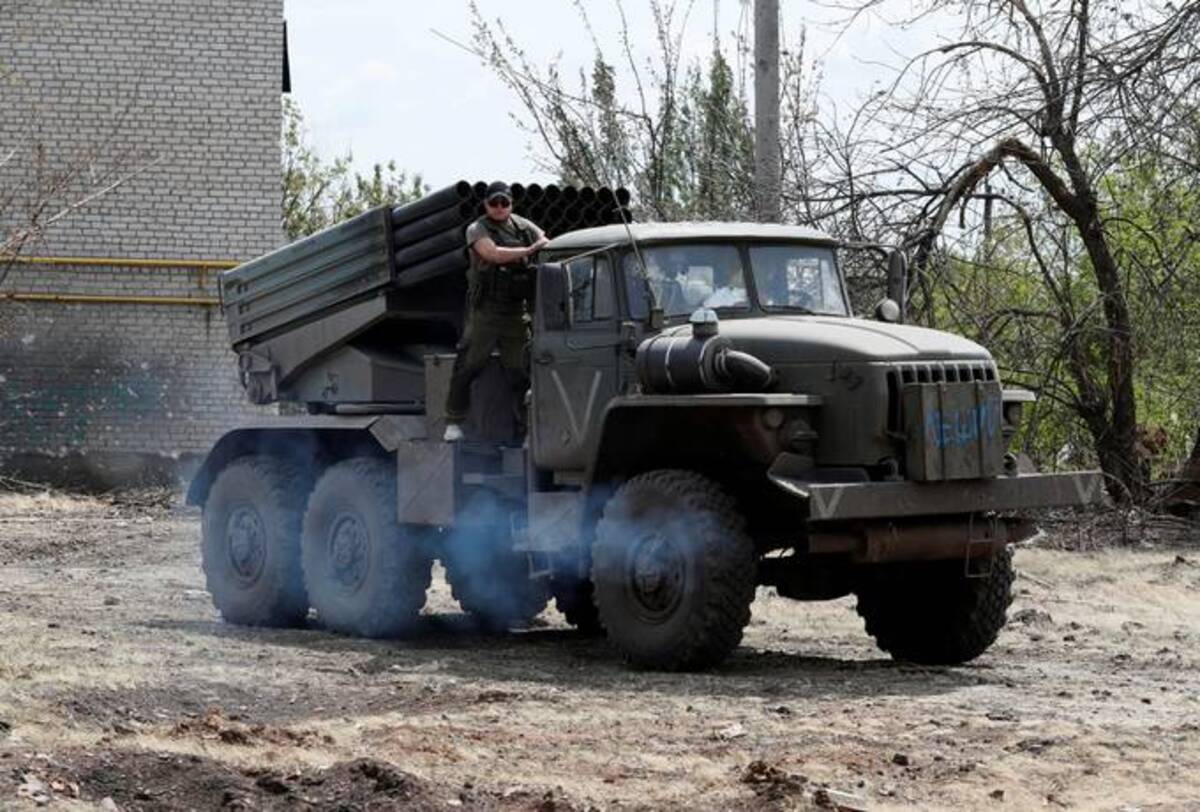 Service members of pro-Russian troops drive a BM-21 Grad multiple rocket launch system during Ukraine-Russia conflict in the town of Popasna in the Luhansk Region, Ukraine on May 26. (REUTERS/Alexander Ermochenko) | | | In the coming days, you're probably going to be hearing a lot more about the Multiple Launch Rocket System (MLRS). Ukraine wants it. America is debating whether to provide it. Russia is sharply warning that deploying it would cross a red line, with unspecified consequences. In other words, it's the Ukraine war in a nutshell. Kyiv is publicly pressuring the United States and its allies to deliver another advanced arms package that would be used to kill Russians. Moscow is trying to deter Washington. And President Biden is weighing the MLRS' battlefield usefulness against the possibility it (further) sets off Russian President Vladimir Putin. OK, so what's an MLRS? On Friday, my colleague John Hudson described it this way: "[A] U.S. weapon capable of firing a torrent of rockets many miles farther than current Ukrainian capabilities." John said the United States was leaning toward providing it to Ukraine, pending Biden's okay. "The Biden administration is attempting to help Kyiv defend itself without provoking Russian retaliation on U.S. forces or allies. In a closed-door briefing on Capitol Hill this week, State Department officials said that some White House officials had concerns that providing the MLRS with a range of more than 180 miles could result in Ukrainians forces firing rockets into Russian territory and causing a major escalation, according to people familiar with the briefing, who, like others, spoke on the condition of anonymity to discuss military matters." Over at CNN, which was first to report the U.S. was preparing to send MLRS to Ukraine, Jim Sciutto, Natasha Bertrand, and Alex Marquardt noted: "One major hang-up, the sources said, had been the rocket systems' extensive range. The MLRS and its lighter-weight version, the HIMARS, can launch as far as 300 km, or 186 miles, depending on the type of munition. They are fired from a mobile vehicle at land-based targets, which would allow the Ukrainians to more easily strike targets inside Russia." So: Ukraine, which is losing ground to Russia in an artillery-dominated war in the eastern Donbas region, wants MLRS because of its far-greater range. And what makes it useful to Kyiv makes it dangerous to Moscow. | | Against that backdrop, a reporter asked Biden on Monday whether he would "send long-range rocket systems to Ukraine." The president responded: "We're not going to send to Ukraine rocket systems that can strike into Russia." He did not elaborate. The Daily 202 asked the White House whether Biden meant he would not provide MLRS at all, or whether he would provide it but not with the longest-range munitions. A Biden aide, speaking on the condition of anonymity, emailed back. "Rocket systems such as MLRS continue to be under consideration, but nothing is on the table with long range strike capabilities (beyond for battlefield use in Ukraine) as the President said." That's not exactly crystal clear. Long-range strike capability is okay "for battlefield use," not other contexts? Is this a restriction on the weapons system and the kind of munitions, or an admonition to Ukraine about its use? | Giving some, withholding some | | Probably the munitions, if I'm reading John's piece from last week correctly. "A senior U.S. official said the White House is comfortable with providing the MLRS system to Ukraine but will seek to manage the escalation risk by withholding the longest range rockets compatible with the system. "Typical rockets fired by these systems have a range of about 43 miles, according to Army data. Specialized rockets called Army Tactical Missile Systems can strike much farther at distances up to 186 miles." Biden's remarks angered Americans who want to do more to support Ukraine militarily. | | Over at Reuters, Steve Holland reported this about the president's comments: "Biden did not rule out providing any specific weapons system, but instead appeared to be placing conditions on how they could be used. Biden and his team are working on a new package of military equipment and it is expected to be announced in coming days." | | At the Guardian, Dan Sabbagh noted this Russian response: "The former Russian president Dmitry Medvedev described Biden's remarks as 'reasonable' and warned that if his country's cities had been struck, then Russian forces would 'have struck at the centres of these criminal decisions.'" Of course, Medvedev doesn't get the last word. That would be Putin. | | |  | What's happening now | | Supreme Court leak investigation heats up as clerks are asked for phone records in unprecedented move | 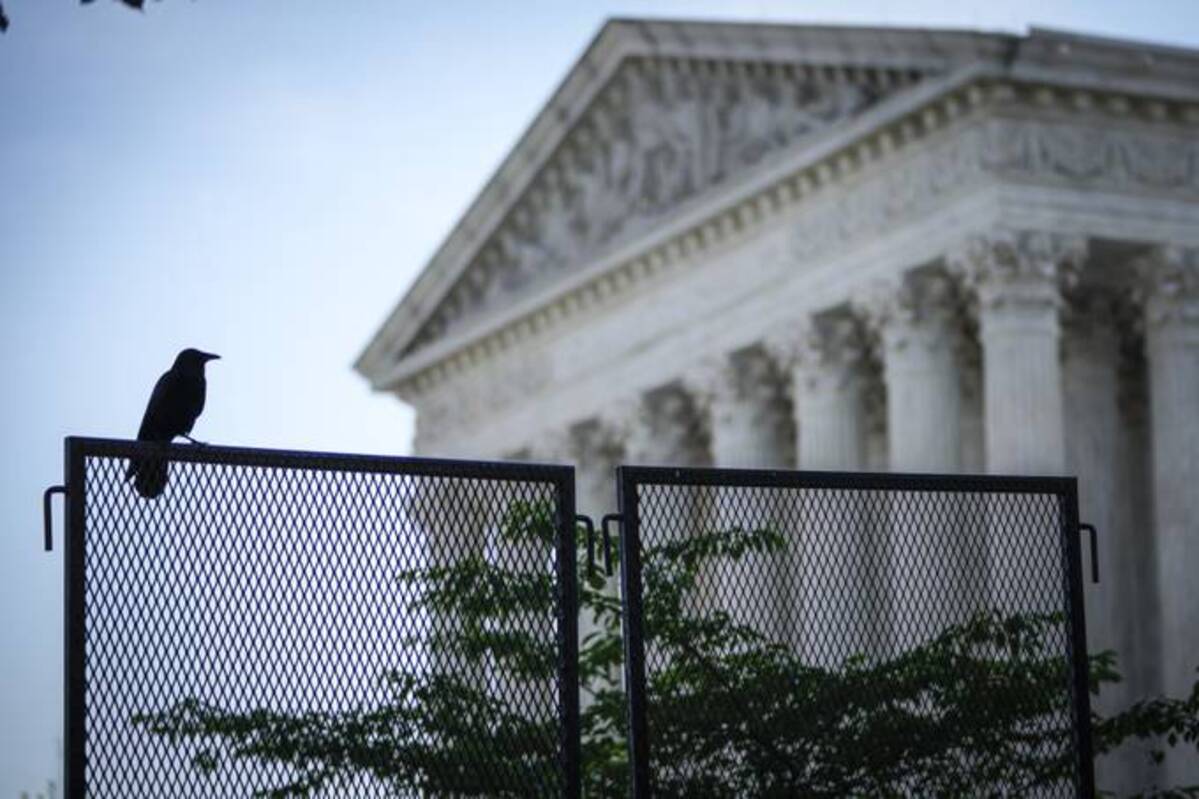 A bird sits atop security fencing outside of the U.S. Supreme Court on Monday. (Drew Angerer/Getty Images) | | | "Supreme Court officials are escalating their search for the source of the leaked draft opinion that would overturn Roe v. Wade, taking steps to require law clerks to provide cell phone records and sign affidavits, three sources with knowledge of the efforts have told CNN," Joan Biskupic reports. | - "Some clerks are apparently so alarmed over the moves, particularly the sudden requests for private cell data, that they have begun exploring whether to hire outside counsel."
| Taiwan scrambles jets after China makes largest incursion into air defence zone since January | | "China has made the second largest incursion into Taiwan's air defence zone this year with Taipei reporting 30 jets entering the area, including more than 20 fighters," Agence France-Presse reports. "Taiwan's defence ministry said late on Monday it had scrambled its own aircraft and deployed air defence missile systems to monitor the latest Chinese activity." | Russia seizes half of key city Severodonetsk | | "Russian forces now control 'around half' of Severodonetsk, one of the last major Ukrainian-held areas of the country's eastern Luhansk region, local officials said. Capturing the whole city would be a major symbolic victory for Russia," Adela Suliman, Amy Cheng, Andrew Jeong and Ellen Francis report. More key updates: | | |  | Lunchtime reads from The Post | | Schools are struggling to meet rising mental health needs, data shows | 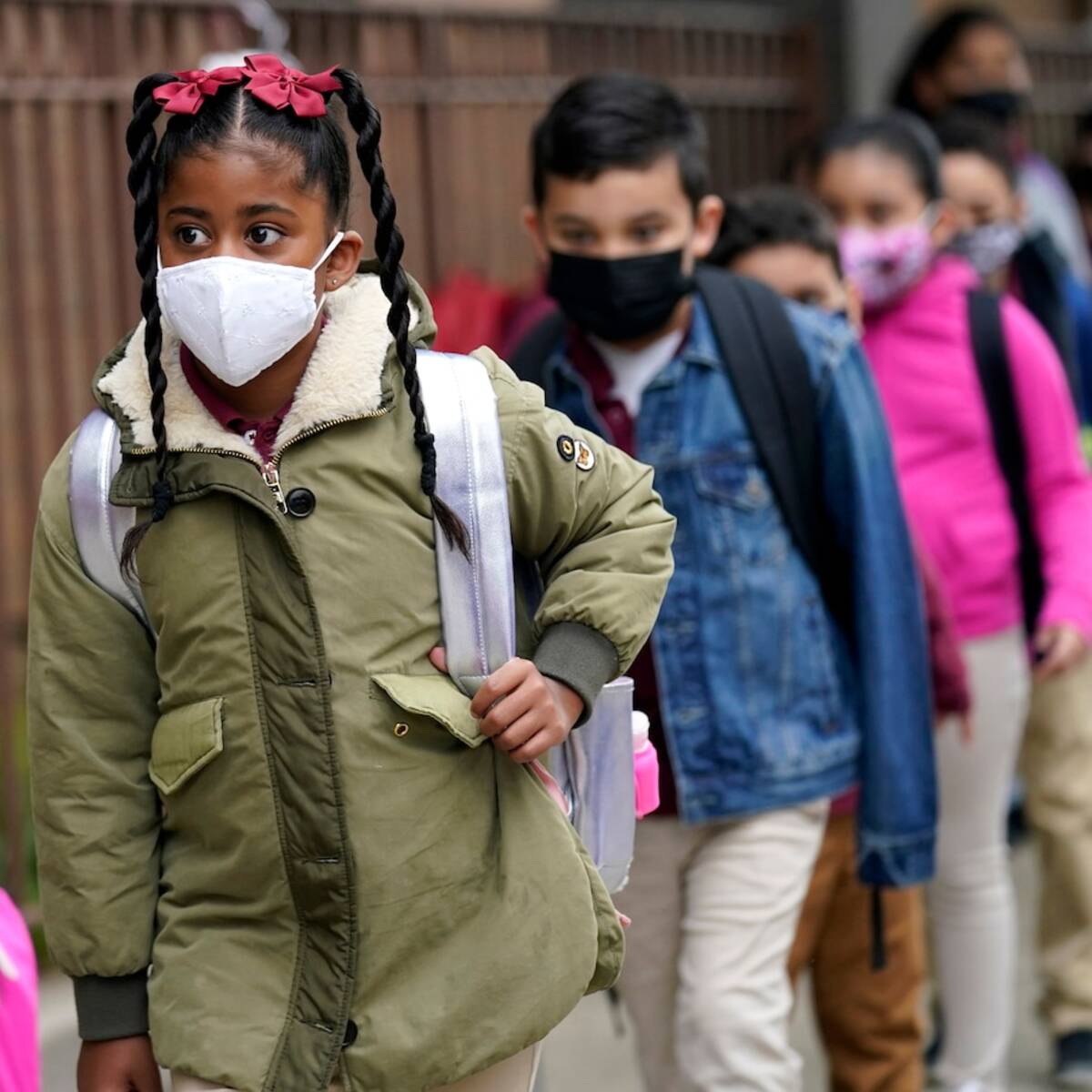 Students line up to enter an elementary school in Jersey City last year. (Seth Wenig/AP) | | | "A survey released Tuesday documents the toll the pandemic has taken on students' mental health, with 7 in 10 public schools seeing a rise in the number of children seeking services. Even more, 76 percent, said faculty and staff members have expressed concerns about depression, anxiety and trauma in students since the start of the pandemic," Laura Meckler reports. "Yet only about half of all schools said they were able to effectively provide needed services." | Rosaries, bouquets and tiny caskets: Uvalde begins to bury its dead | | "Priests who last week comforted still-bleeding children and pastors who prayed with anxious parents on Monday turned to the familiar rituals surrounding Christian burials. Volunteers flew and drove in from across Texas and all over the country to help with various aspects of the funerals. Operators of a food truck handed out food and water. Florists shaped casket 'sprays.' The head of the Texas Funeral Directors Association brought in an extra funeral coach along with other morticians — some experts at the art of facial reconstruction — to assist," Annie Gowen and Teo Armus report. | Workers' share of economic pie isn't growing | | "The tight labor market has made it easier for workers to find jobs and to earn raises. But by the broadest possible measure, this increased leverage hasn't translated into a change in the relative positions of employees and employers," the Wall Street Journal's David Harrison reports. | Ethical questions cloud Zinke's 'SEAL PAC' | | "SEAL PAC's ads all strongly suggest the group raises money solely for Republicans who are military veterans…But the reality is different. A CQ Roll Call analysis has found that nearly a quarter of the 129 candidates who have gotten SEAL PAC money so far in the 2022 election cycle never served in the U.S. military," Roll Call's John M. Donnelly reports. | A Republican tried to introduce a gun law. Then the gun lobby got involved. | | "Cole Wist was a Republican state House member in Colorado with an A grade from the NRA. Then, in 2018, he supported a red flag law, sponsoring a bill to allow guns to be taken away — temporarily — from people who pose an immediate threat to themselves or others," ProPublica's Megan O'Matz reports. "Wist lost his seat in the legislature that year in the face of an intense backlash from Rocky Mountain Gun Owners, a gun rights organization in Colorado that boasts it accepts 'no compromise' as it battles 'the gun grabbers.'" | | |  | The Biden agenda | | Biden wants to rebuild the EPA. He doesn't have the money to do it. | 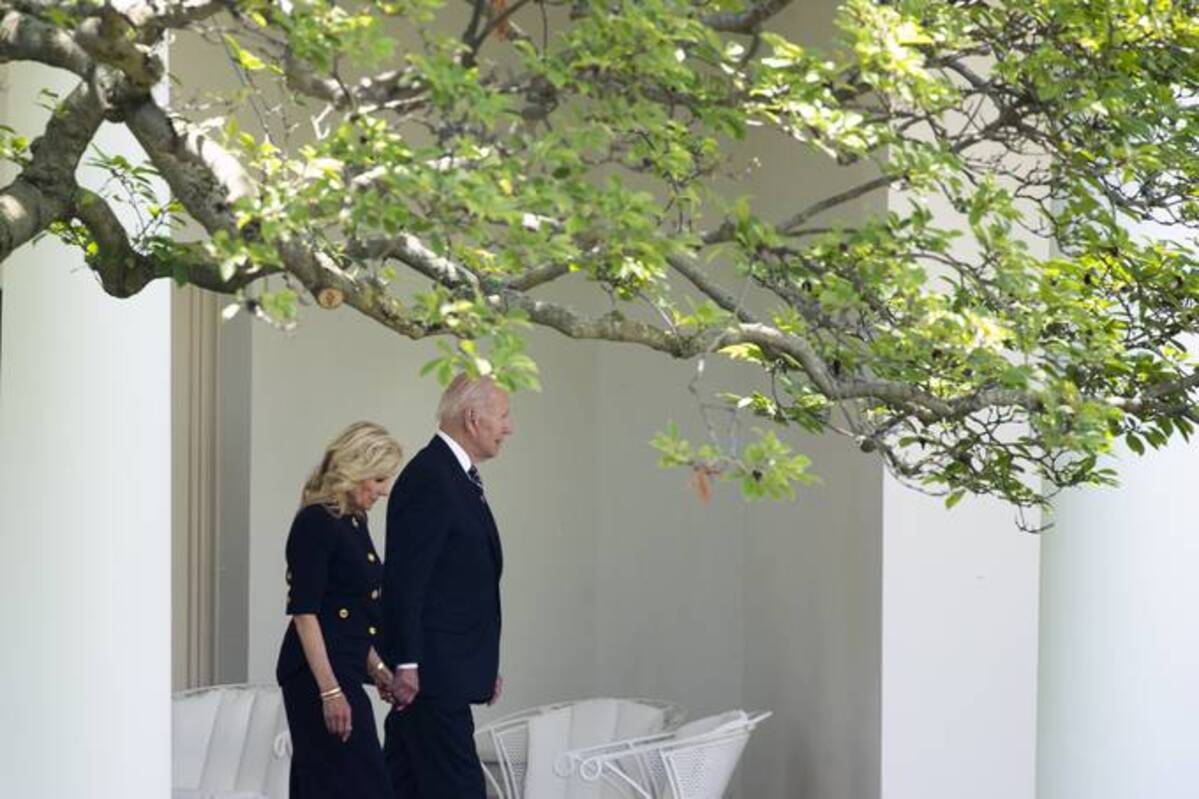 President Biden and first lady Jill Biden walk through the Colonnade on Monday before a tree-planting ceremony with surviving families of service members who have passed away. (Michael Reynolds/EPA/Bloomberg News) | | | "The agency's funding has remained stagnant since his inauguration. Its work is hamstrung by low staffing levels not seen since Ronald Reagan left office," Dino Grandoni reports. "The lack of resources and workers has undercut its ability to inspect facilities, measure contamination, punish violators and write new rules to stem pollution and climate change at a time when scientists say the world needs to act faster to stop runaway global warming." | Biden sees exodus of Black staffers and some frustration among those who remain | | "At least 21 Black staffers have left the White House since late last year or are planning to leave soon. Some of those who remain say it's no wonder why: They describe a work environment with little support from their superiors and fewer chances for promotion," Politico's Daniel Lippman reports. | In his (administration's) own words: Biden's plan to fight inflation | - "The Federal Reserve has a primary responsibility to control inflation. My predecessor demeaned the Fed, and past presidents have sought to influence its decisions inappropriately during periods of elevated inflation. I won't do this."
- "We need to take every practical step to make things more affordable for families during this moment of economic uncertainty—and to boost the productive capacity of our economy over time."
- "We need to keep reducing the federal deficit, which will help ease price pressures."
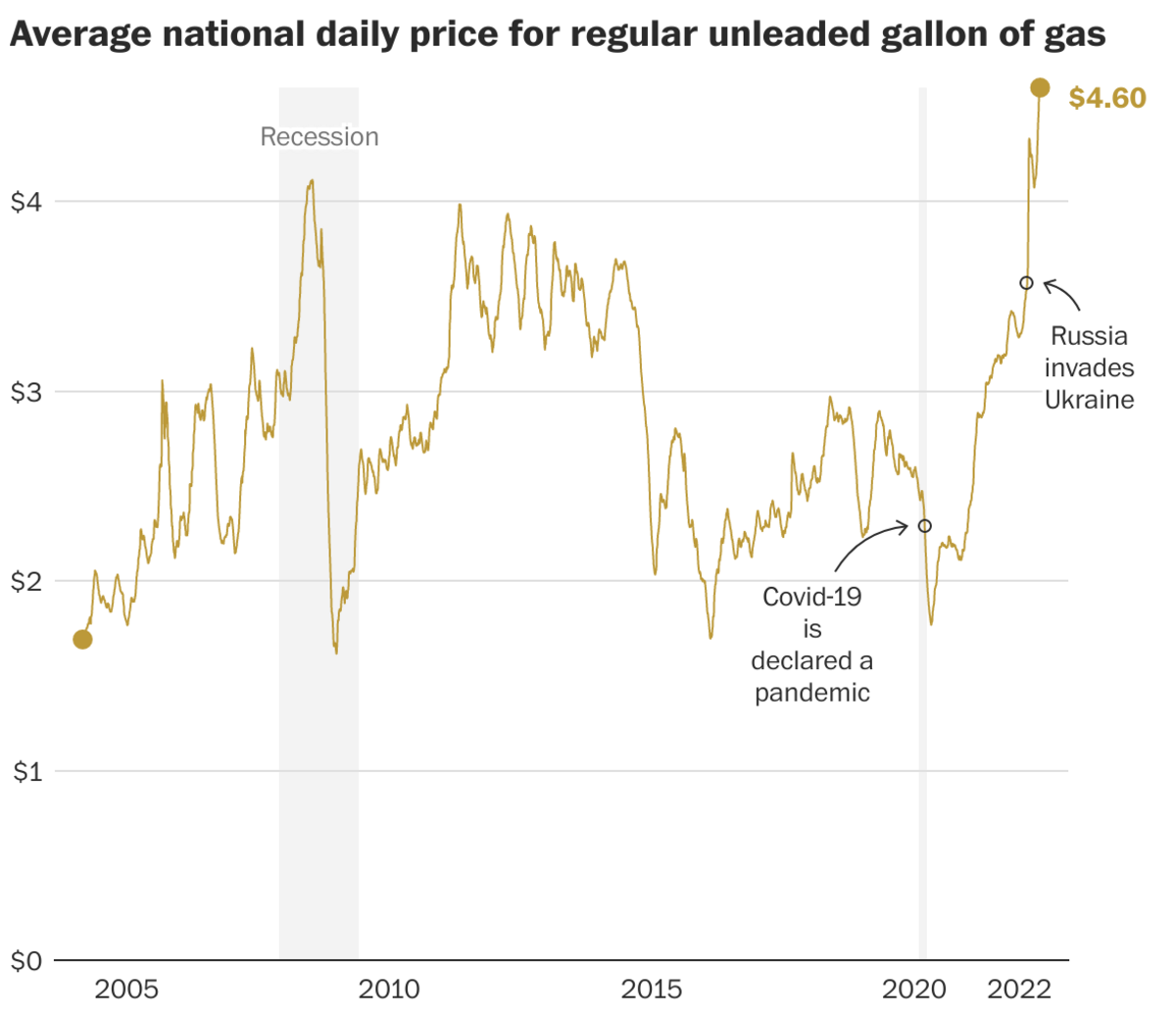
| Biden prepares asylum overhaul at border, but court challenges loom | | "The Biden administration this week plans to begin using an overhauled system for screening migrants seeking humanitarian protection along the U.S. southern border, relying more on asylum officers instead of immigration judges to help determine who gets to stay in the country," Nick Miroff reports. | | |  | The cost of gas, visualized | | | |  | Hot on the left | | I created the FBI's active shooter program. The officers in Uvalde did not follow their training. | | "Every shooting is evaluated in three parts: How could we have prevented the shooting? Did we respond effectively to save lives? How are we helping the community recover? Last Monday, the F.B.I. designated 61 shootings in 2021 as active shooter attacks, up from 40 in 2020 and 30 in 2019. We aren't preventing the shootings, I realized. Perhaps, I thought, we were doing better in responding to the attacks as they unfolded," retired FBI special agent Katherine Schweit writes for the New York Times. "But if the 78 minutes that the police in Uvalde waited before confronting the gunman at Robb Elementary are any indication, the answer is: We aren't. Waiting so long, the director of the Texas Department of Public Safety said Friday, "'was the wrong decision. Period.'" | | |  | Hot on the right | | Tom Cotton's rigid conservatism | 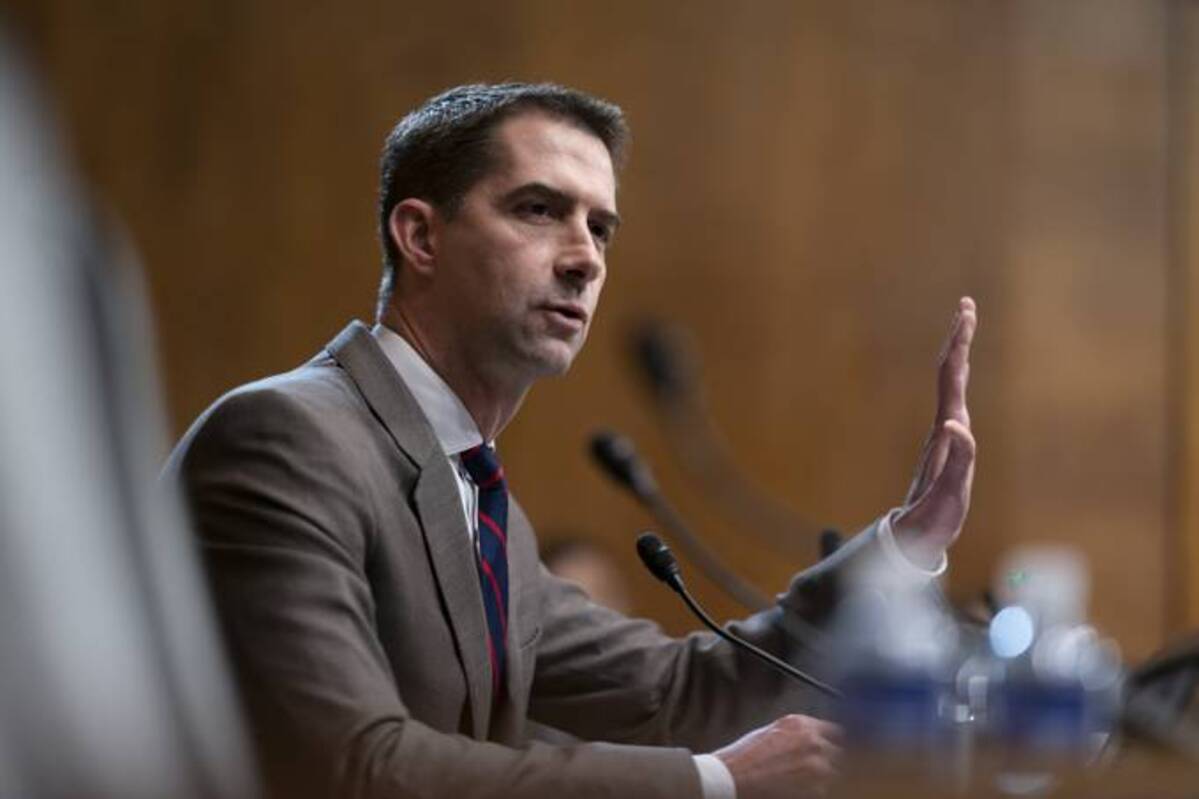 Sen. Tom Cotton (R-Ark.) questions Steven Dettelbach, President Biden's pick to head the Bureau of Alcohol, Tobacco, Firearms, and Explosives, on May 25. (J. Scott Applewhite/AP) | | | "Politicians don't enjoy it, but most change positions at least once in their careers. Then there's Tom Cotton," Politico's Burgess Everett reports. "From restricting legal and illegal immigration to hawkish foreign policy to criticizing the nation's 'under-incarceration' of criminals, the Arkansas senator keeps staking out hardline positions in anticipation that fellow Republicans will come to him. As small-government as they come on every issue other than national security, Cotton is a 1980s throwback — mentioning former President Ronald Reagan 10 times in a lengthy interview with POLITICO." | | |  | Today in Washington | | | Biden and Vice President Harris will have lunch at noon. At 1:15 p.m., Biden will meet with Federal Reserve Chair Jerome H. Powell to talk inflation and the economy. The president will meet with K-pop boy band BTS at 3 p.m. to discuss "the need to come together in solidarity, Asian inclusion and representation, and addressing anti-Asian hate crimes and discrimination." | | |  | In closing | | Why the press will never have another Watergate moment |  Richard M. Nixon waves goodbye while departing the White House in 1974. (Chick Harrity/AP) | | | "Thinking about Watergate saddens me these days. The nation that came together to force a corrupt president from office and send many of his co-conspirator aides to prison is a nation that no longer exists," Margaret Sullivan writes. "It's not just our politics that have changed. It's also our radically transformed media environment." | | Thanks for reading. See you tomorrow. | | |




No comments:
Post a Comment