| A quick note to readers: 5-Minute Fix is taking a vacation next week, but we'll be back in your inbox July 11 with all your political explainers. Have a happy and healthy July Fourth holiday. They're not done investigating or having hearings. But after a month of hearings and revelations, we have enough to assess the potential impact of the congressional Jan. 6 committee. Here are four schools of thought. It could make Donald Trump more criminally liable: The Justice Department has been skittish about investigating a former president or his top aides, worried about the precedent that could set. But these hearings are banging the drum for at least some indictments. "I think the Jan. 6 hearings will embolden prosecutors to be more aggressive in pursuing indictments," said Jeffrey Jacobovitz, a lawyer focused on criminal law. "It is clear the public opinion has shifted in that direction." 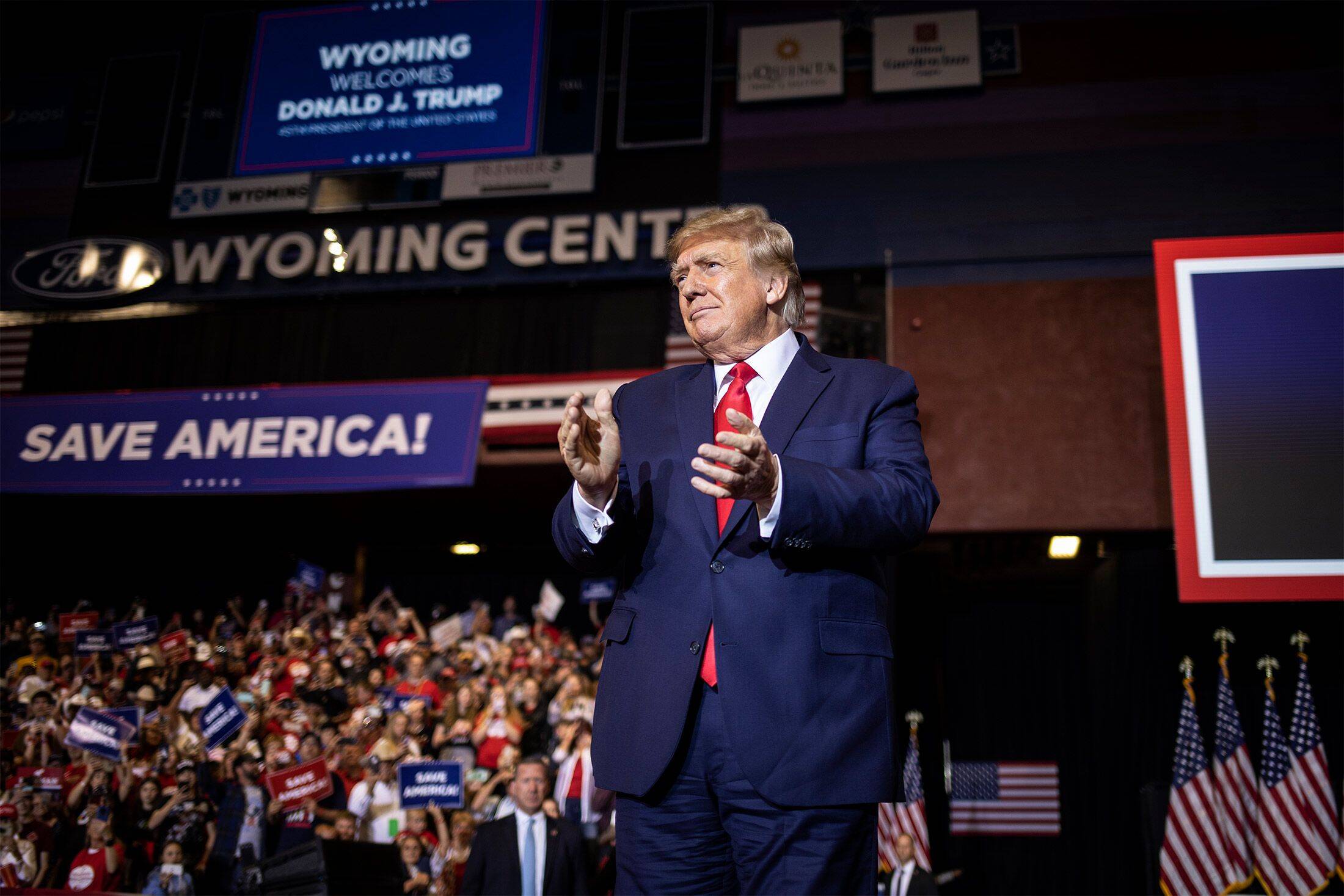 Donald Trump at a May rally in Wyoming. (Chet Strange/Getty Images) | It might damage Trump politically: No one is arguing that this committee will change the minds of die-hard Trump backers. But could it at least influence on-the-fence Trump supporters and Republican donors? Writes The Post's Aaron Blake: "There's a credible case to be made that the most likely effect of the Jan. 6 hearings isn't criminal charges against Trump or his party breaking from him fully, but a more gradual realization that it might be best to move in a different direction in 2024 — if for no other reason than Trump's baggage." It's for the history books: Here's how Rep. Adam Kinzinger of Illinois, one of two Republicans on the committee, put it recently: "You're going to know the truth. And when your kids go to school, someday they're going to be taught the truth about January 6th because of the work this committee is doing." Or it could backfire: Gas prices and grocery costs are sky-high; baby formula is still difficult to find. There is a political constituency that believes the Jan. 6 committee is a political overreach; only two House Republicans support it. And in November's midterm elections, Republicans can contrast the difficult inflationary economy with the committee's work, to make it look like political theater. What is witness tampering? And could this charge apply to Trump? 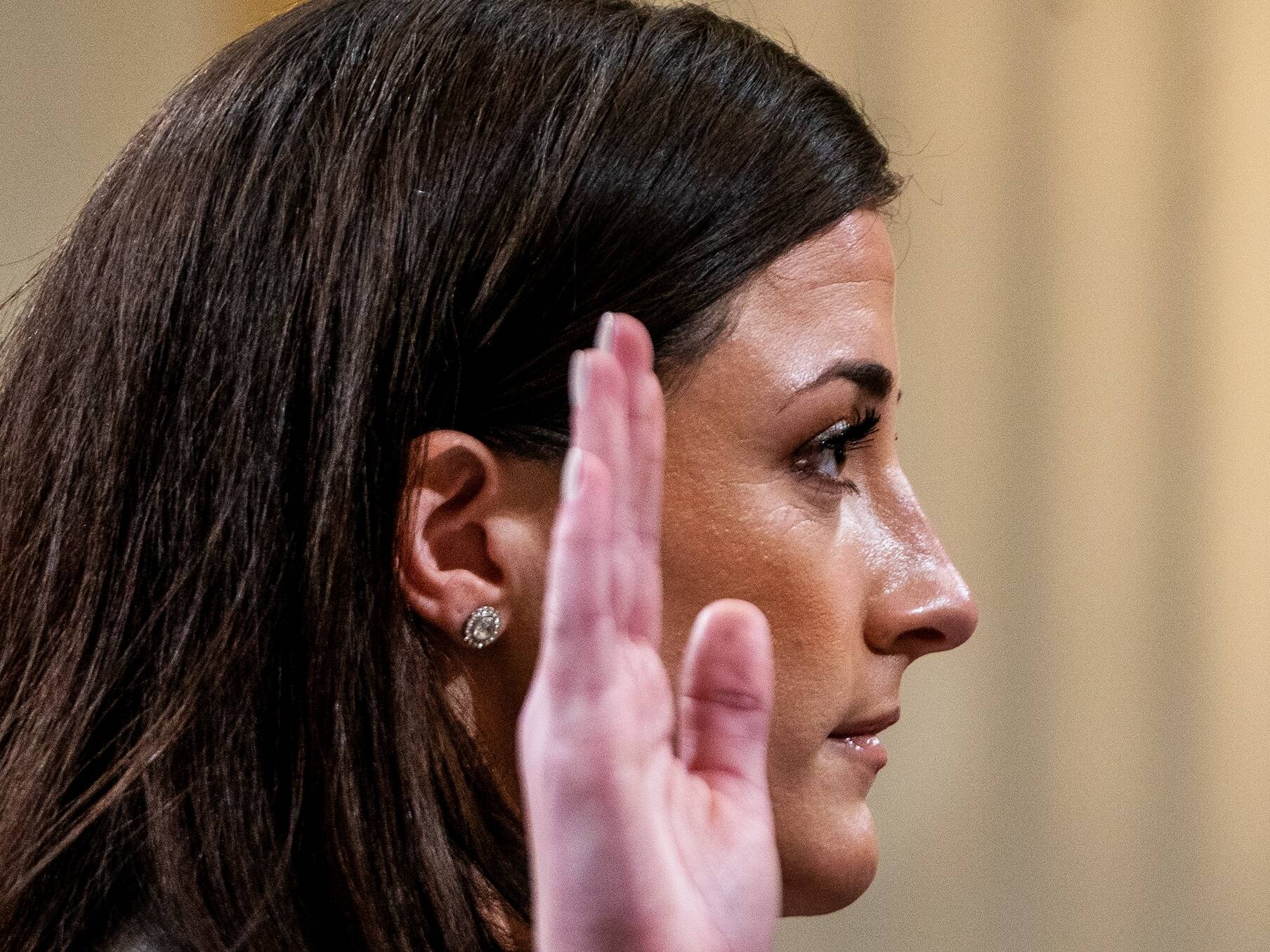 Cassidy Hutchinson, an aide to Trump White House chief of staff Mark Meadows, prepares to testify before the Jan. 6 committee Tuesday. (Demetrius Freeman/The Washington Post) | If any criminal referrals come out of the Jan. 6 committee's investigation, witness tampering could be a big one. At the end of Tuesday's hearing, the committee shared messages it said two of their witnesses received urging them not to testify to the committee. Rep. Liz Cheney, R-Wyo., the No. 2 on the committee, said one witness described receiving threatening phone calls. "They have reminded me a couple of times that Trump does read transcripts and just keep that in mind," according to a text message shared by Cheney Three conditions must be met for something to be considered witness tampering, said white-collar criminal lawyer Jack Sharman, who served as a special counsel to Congress during its investigation of President Bill Clinton. 1. There is a proceeding going on, such as a grand jury (or, in this case, a congressional hearing). 2. There is an intent to influence witness testimony in that proceeding. 3. The intent is wrongful, meaning the person wanted to prevent the truth getting out to avoid being accused of wrongdoing. Trump's liability in this is unclear. The seeds are there for a witness tampering charge, either against the president or the people who made the calls. "To me it's clear tampering if an upcoming witness is told the president reads the transcripts," Jacobovitz said. "The person who called engaged in tampering. If Trump encouraged or asked someone to make the call, he would be criminally liable as well." And Trump has a long history of pressuring witnesses who could testify about him or his business practices in one of his many legal disputes, report The Post's Rosalind S. Helderman, Josh Dawsey and Jacqueline Alemany. What would ending the filibuster for abortion mean? President Biden says he supports this. It would mean that Senate Democrats vote to create a "carve out" for abortion so that issues related to abortion wouldn't be subject to the 60-vote rule; they would require only a majority, or 51 votes. Democrats would use this to pass federal legislation protecting abortion rights, overriding red-state restrictions and bans. (Right now there is no federal law governing when a woman can obtain an abortion.) This winter, Democrats tried — and failed — to create a similar carve-out on voting rights that would have allowed them to pass a national voting standard and override red-state restrictions on voting. And both parties have created carve-outs for a president's judicial and political nominees. Now, nominees for the Cabinet, federal judgeships and on up to Supreme Court can't be filibustered. But to create a carve-out requires a majority of votes to change the rules. And Senate Democrats don't have that right now. No matter the issue, no matter the pressure from the left and Biden himself, two Senate Democrats — Joe Manchin of West Virginia and Kyrsten Sinema of Arizona have opposed changes to the filibuster. They argue that the other side could just use the tool to ban abortion rights, for example, when they get in power. | 



 Email
Email


No comments:
Post a Comment