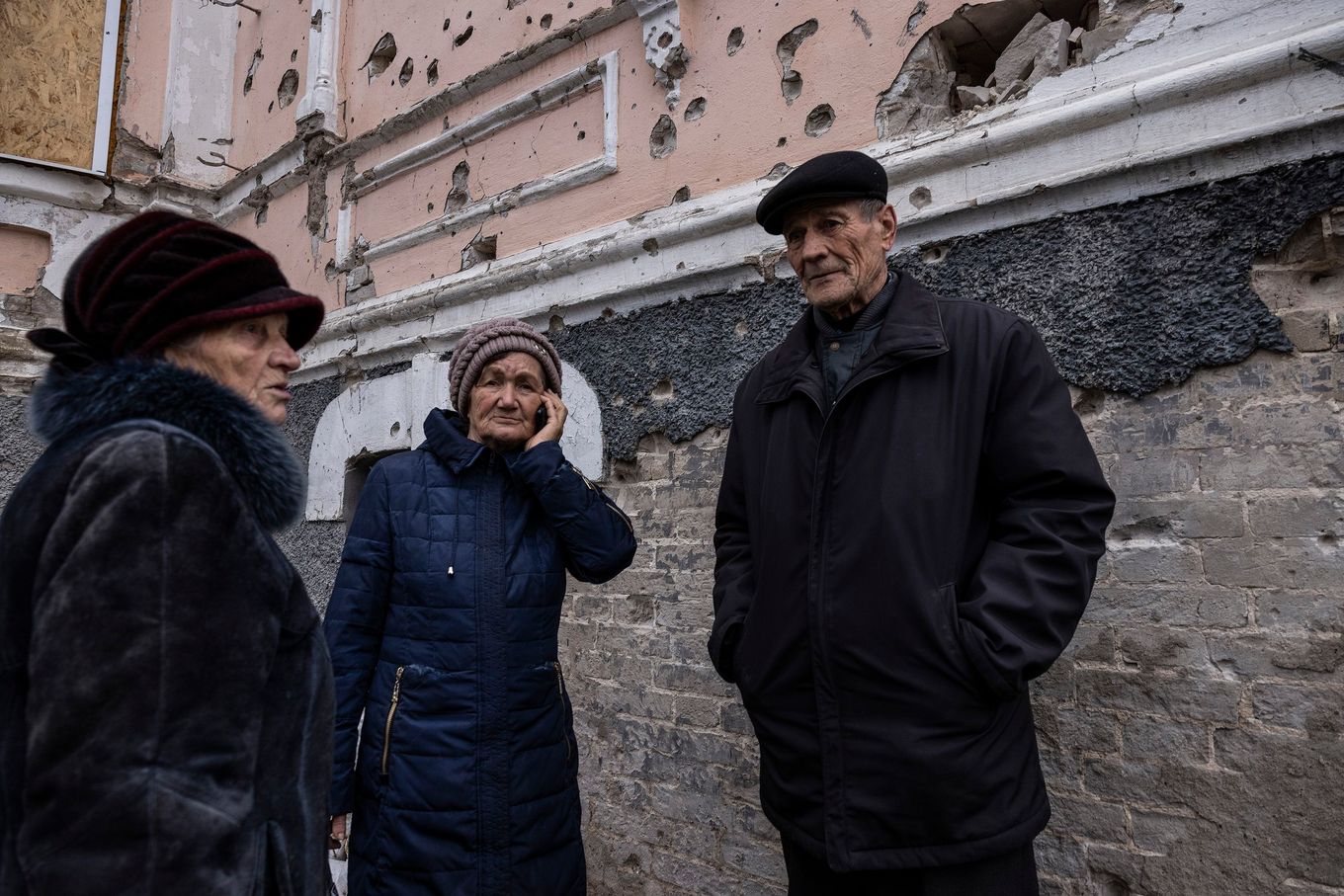
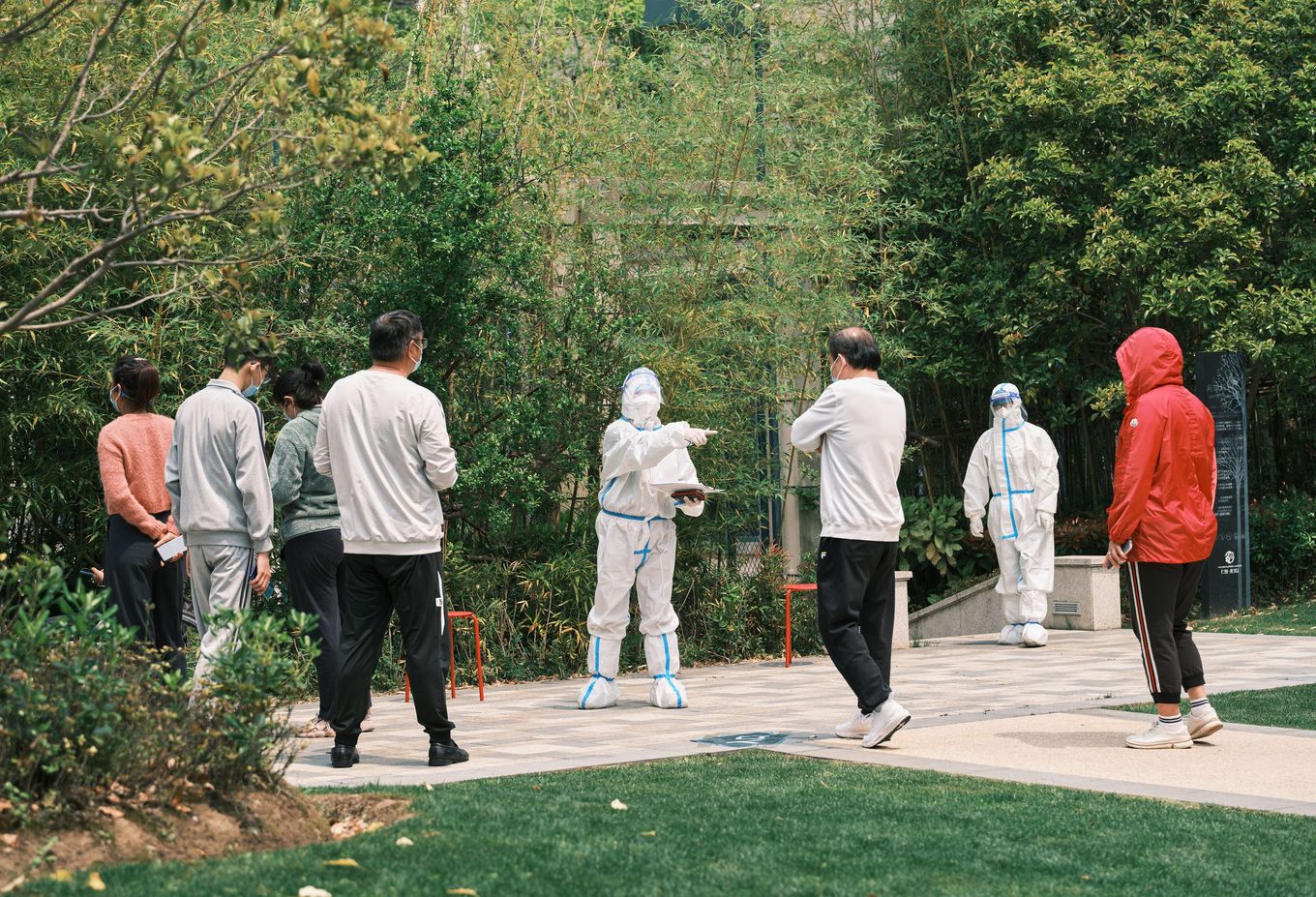
| | | | | | 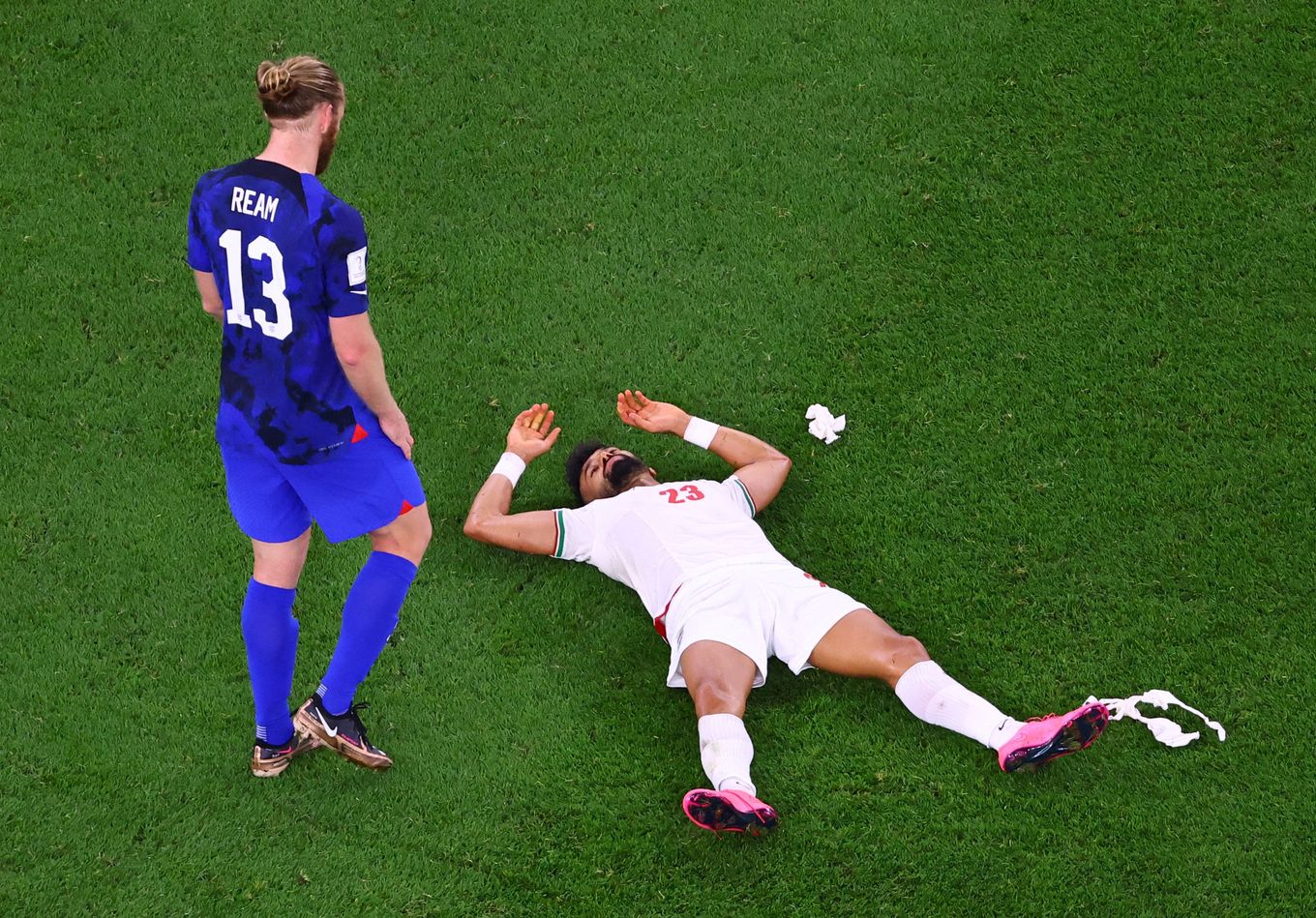 Ramin Rezaeian of Iran and Tim Ream of the United States at the World Cup. (Fabrizio Bensch/Reuters) | DOHA, Qatar — In the last frantic moments of Tuesday's U.S.-Iran World Cup match, as the United States clawed away a desperate Iranian attack, an American fan sitting not far from me wrenched off the black-banded white headdress that had accompanied the traditional Gulf Arab thawb he had chosen to wear to the game and flung it in the air. "Why?" he screamed. The headdress settled somewhere else in the crowd and the nerve-racked fan received for an answer only the referee's whistle. The United States had narrowly won its last group stage game, securing qualification to the next round, with the Netherlands now standing in the way of a U.S. spot in the quarterfinals. Why had the battle with Iran's team — an inferior, if tenacious, opponent — been so miserably tense? Probably because it couldn't have gone any other way. For a first-round match, the stakes could not have been higher. The United States had to win to progress to the second knockout stage and show that the promise of its rising generation of young stars was more than just potential. Iran had to avoid defeat (and trust in a blunt Wales failing against England, which it did). The team was hoping for a repeat of a famous 2-1 victory over the United States in the 1998 World Cup in France — still a major triumph in Iran's sporting history. It was to be disappointed. For two nations that have no diplomatic relations and no shortage of political enmity, there were plenty of tensions that had nothing to do with points and qualification. With mass anti-regime protests still roiling Iran, its national team muddled through the tournament under a harsh spotlight. Its players, many of whom expressed at least tacit support for the demonstrators, faced alleged pressure from regime officials as well as the anger of a segment of the Iranian diaspora that saw the team as a pawn of the regime. The United States raised the temperature when its soccer federation put out images on social media of the Iranian team's flag shorn of the insignia of the Islamic Republic. Those were swiftly deleted, but Iranian officials called for the United States to face punishment, even expulsion from the World Cup, for the act. It was yet another episode of political rancor at a tournament where organizers have dogmatically insisted politics have no place.  | | | But, for Iran, you can tell an entire political story in the span of the generation that bridges American victory in Qatar and American defeat to Iran in Lyon 24 years ago. Unlike in 1998, there was no shared group photo of this year's U.S. and Iranian players standing together in an appeal to the uniting power of sport. Unlike in 1998, the Iranian players did not offer roses to their U.S. counterparts before the match began. Amid an asphyxiating U.S. sanctions regime and constant threats of war, there were no fig leaves or olive branches to be dispensed. The Iranian regime faces even more international scrutiny and criticism now, and plumbs even greater depths of grievance toward the United States and its Western allies. In 1998, a handful of anti-regime Iranian protesters chanted slogans against then-President Mohammad Khatami. These days, Khatami is a forlorn, marginal figure, a supposed "reformist" sidelined by the ascendancies of more hard line loyalists to the regime's clerical establishment and irrelevant to the protesters clamoring for fundamental change on Iran's streets. "People feel reformists helped hard-liners by promising reforms that were impossible with hard-liners in power," a former official who served in the Khatami administration told Reuters this month. "We should accept that the younger generation in Iran does not want us. The reform movement is dead." There was plenty of animosity on show in 1998, as well. Star Iranian striker Khodadad Azizi vowed vengeance for the ruinous Iran-Iraq war, which Iranians blamed on U.S. meddling: "Many families of martyrs are expecting us to win," he said. "We will win for their sake." Speaking to the Guardian in 2018, Steve Sampson, who coached the losing 1998 U.S. side, lamented his team's approach two decades prior. "I think the government of Iran made it a political match," he said. "If I was to do it all over again, I would've brought up the history between the two countries with the players and used it as a motivational tool to get a result. But I chose not to at the time." Iran's athletes have become, in some instances, figures of resistance to the regime. One of the stars of the Iranian national team in 1998 was legendary striker Ali Daei, who slipped in a crucial pass to set up his team's winning goal against the Americans. Daei remains a popular national hero and has spoken in support of the protest movement in Iran, calling on authorities to release the many demonstrators swept up in crackdowns by security forces. He declined the opportunity to go to Qatar and cheer on the team both as a gesture of solidarity with the dissenters and because of an apparent backlash against him from pro-regime forces. "I have received numerous threats against myself and my family in recent months and days from some organizations, medias and unknown individuals," Daei said in a statement on Instagram. "I was taught humanity, honor, patriotism and freedom … What do you want to achieve with such threats? What this Iranian team has achieved in fraught circumstances is an open question. They were panned for a disastrous opening-game loss to England where none of the players sang the national anthem, before securing a clutch victory over Wales — where some of the players, perhaps goaded by authorities, did sing. "To make them the only people that they need to give you answers about the human being problems all over the world," Carlos Queiroz, Iran's coach, said at a news conference last week when confronted by questions over the protests, "I don't think it's fair." Before Tuesday's match at al-Thumama stadium, myriad Iranian fans echoed that line. "I came all the way here from the United States to support the Iranian national team," said a woman named Sherry, who said she lived in Houston but sported Iranian colors. "It would be the same for me if it was under the shah or if it's under the Islamic Republic." Others expressed rage at the political status quo in Iran. "All spectators coming here have mixed feelings. The Islamic regime is trying to hijack this team's success," warned a man named Sina, who was born in Iran but lives in Sydney. He lamented the plight of hundreds of recent political prisoners in Iran, many of whom he feared will be executed. Milad Seyedi and a group of his relatives journeyed to the game from Toronto. The Iranian team was "the people of Iran's team," not the regime's squad. "They are under all sorts of pressures. Their families are under pressure," Seyedi added. "We are not against them." The jerseys that Seyedi and his siblings all wore were replica versions worn by the 1998 team. "That was a joyous time for us," he said. | | | 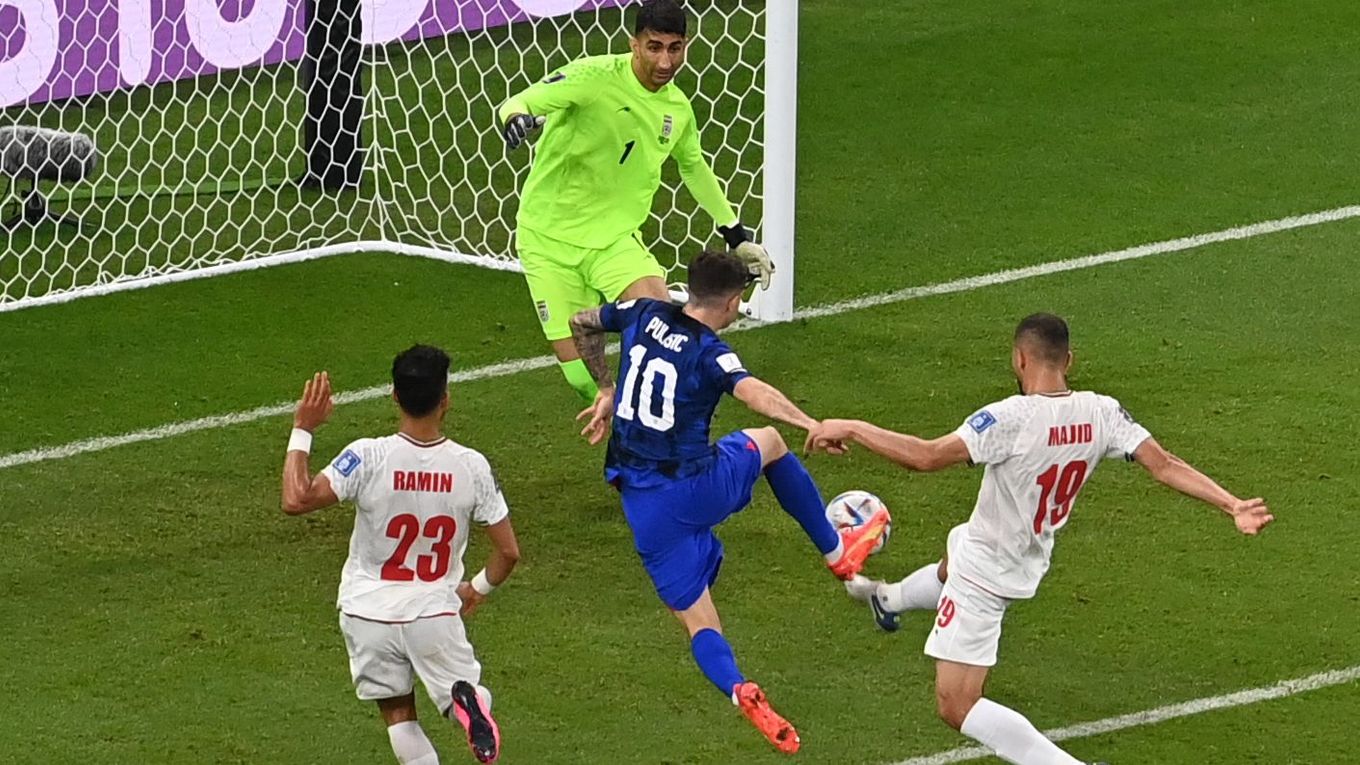 USA's forward Christian Pulisic scores his team's first goal past Iran's goalkeeper Alireza Beiranvand at the Al-Thumama Stadium in Doha on Nov 29. (Odd Andersen/AFP via Getty Images) | By The Post's Sports columnist Barry Svrluga: "Whether Christian Pulisic was born to be in this position or was thrust into this position or pushed himself to be in this position is immaterial. Here he was Tuesday, in the only position that mattered, charging toward the goal in the 38th minute. "Captain America" by choice or by fate or by diligence, the moment needed a superhero draped in red, white and blue. Sergiño Dest was already behind the Iranian defense, and he got his head on a ball served perfectly by Weston McKennie, like Pulisic just 24. Pulisic is the star of the U.S. men's national team because of his skill and his savvy, and that has been the case since he was a teenager. This moment — his moment — called for something more than finesse or creativity. It may not be brave or courageous, exactly, to charge at a soccer ball in the midst of heavy human traffic, risking personal injury, showing what athletic sacrifice means. But it's something close to that — a will, a way. Because Christian Pulisic had it in that moment — laid out on a pitch on the outskirts of Doha, Qatar, the goal more precious than the body that provided it — the United States is moving on to the knockout stage of the 2022 World Cup." | | | 1,000 Words 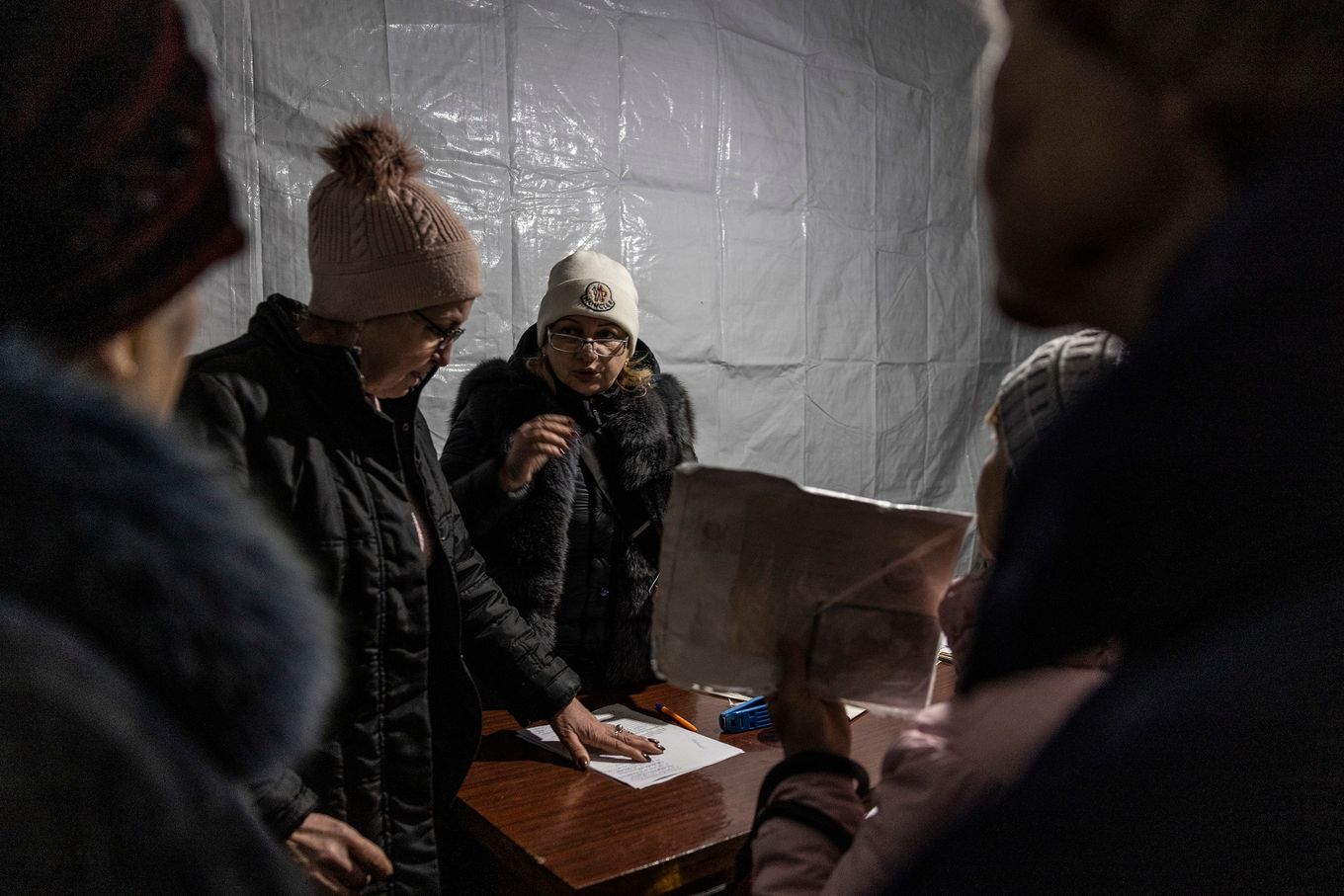 Acting Orikhiv mayor Svitlana Mandrych. (Photos by Heidi Levine for The Washington Post) | Svitlana Mandrych is running what is left of her town of Orikhiv, Ukraine from a cramped bunker. She spends her days underground fielding nonstop calls with the help of two remaining council members and the company of a dog named Bullet. "Everybody has a different fear tolerance," she said. "I cannot leave the people of Orikhiv behind." | | | Talking Points • China conducted more ballistic missile tests last year than the rest of the world combined and is on course to possess 1,500 nuclear weapons within the next decade, the Pentagon warned. The findings are detailed in a report for Congress released in unclassified format. It outlines China's broad desires to pursue global dominance but comes as the Chinese Communist Party faces perhaps the most serious internal challenge to its authority in decades. • As French President Emmanuel Macron makes the rounds in Washington starting Wednesday for the first state visit of the Biden administration, high on his agenda are his plans for a nuclear energy "renaissance." His entourage includes the major players from France's nuclear energy industry, who will be looking to the French leader to help boost the development and export of their technology. • A review of China's state-owned broadcaster CCTV's coverage of the World Cup, by no means comprehensive, compared with the official FIFA World Cup stream and other international broadcasts indicates a strange point: While other international broadcasts emphasize the onlookers and atmosphere, CCTV appears to be doing just the opposite, its cameras glued to the field. Fans have speculated that the government hopes to de-emphasize the unmasked spectators gathered in Qatar, who have in large part moved on from coronavirus precautions. • Russia this week postponed nuclear arms control talks with the United States due to their "extremely negative" relationship, Russian Foreign Ministry spokesperson Maria Zakharova, said. "We note the highest level of toxicity and hostility in all directions from Washington," she said. "As part of the all-out hybrid war unleashed against us, almost every step the United States has in relation to Russia is subject to a pathological desire to harm our country wherever possible." • For the first time, less than half of the population of England and Wales now consider themselves Christians, new government figures reveal, in a profound demographic shift that is producing a much more secular, diverse Britain. • Three men survived an 11-day journey perched precariously atop the narrow metal rudder of an oil tanker, exposed to the elements, en route from Nigeria to Spain's Canary Islands, the Spanish coast guard said. | | | Top of The Post | | | Viewpoints | | | 'Zero covid' breaking point As the world moved on from pandemic restrictions, China doubled down on its strategy of trying to eliminate the virus In the name of "zero covid," 1.4 billion Chinese citizens confronted a grim reality — a third year of strict lockdowns, relentless testing, lengthy quarantines and the constant tracking of their movements. Now, many people are pushing back. In extraordinary scenes, citizens have gathered despite the significant risk of arrest. They have called for their country to be "freed," not just from the government's pandemic policies but also from its far-reaching control over their lives. It is a wave of dissent and political mobilization not seen in China since the 1989 Tiananmen protests that swept the country before finally being crushed through a brutal crackdown. Like those protests, the current outpouring is a mix of frustration, anger and demands for change that has been building for months, if not years. Under an increasingly repressive system, "zero covid" has become an incendiary symbol. 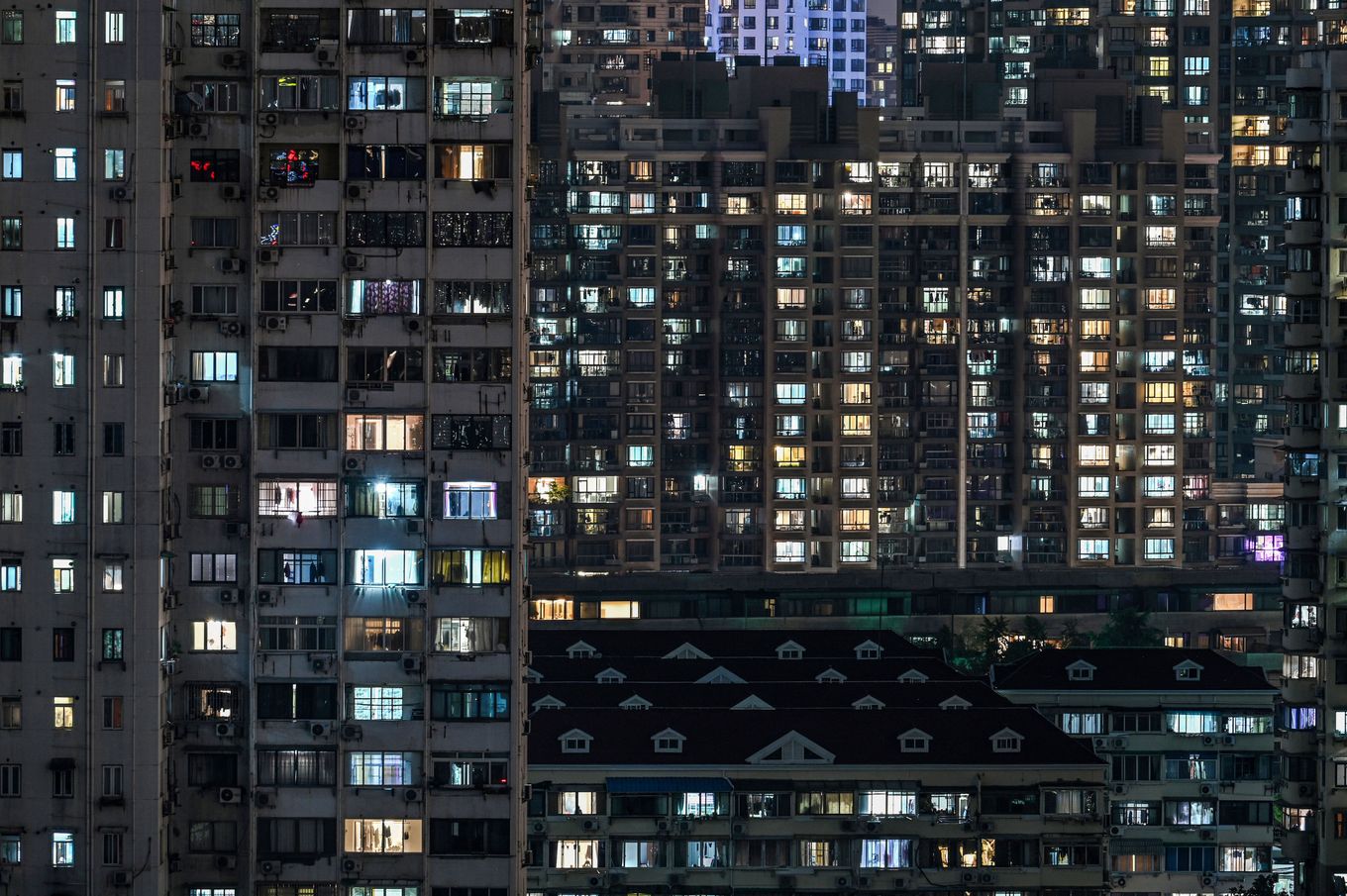 View of residential units during a covid-19 coronavirus lockdown in the Jing'an district of Shanghai on April 21. (Hector Retamal/AFP via Getty Images) | Strict lockdowns In March, authorities imposed a lockdown on the city of Shanghai, placing its 25 million residents under de facto house arrest for two months. Residents struggled to get food or medical help and shouted from their windows for someone to help them. Some people died of conditions having nothing to do with covid-19, after they were unable to get medical care. Wang Huiting was in the city at the time, working at an online food delivery company and caring for her seriously ill mother as she fought ovarian cancer. The 29-year-old said she tried for almost two weeks to get her mother to a hospital. But she was unable to secure an ambulance and, without one, both women were barred from leaving their residential compound. Wang watched helplessly as her mother's condition worsened and fluid in her abdomen built up. A doctor pointed her to an online video showing how that could be drained. She practiced several times on a bag of saline before attempting it for real, draining as much as she could from her mother's body. Two days later, she finally secured the ambulance. Her mother, 54, died three days later at the hospital. "I tried my best," Wang said. "This was a man-made disaster. Whether you are sick or need medication, they just don't care." Signs of discontent The lockdown in Shanghai was one of many across the country that eroded confidence in the government's pandemic policy, once a point of pride for China. As it dragged on, residents there hung protest banners and banged pots on their balconies to signal their misery. Elsewhere, students at universities in Tianjin, Shanghai and Beijing started to resist measures that confined them to their dorms for weeks. In May, students at Peking University, China's top school, rallied against administrators who had tried to erect a wall sealing off one of the dorms. 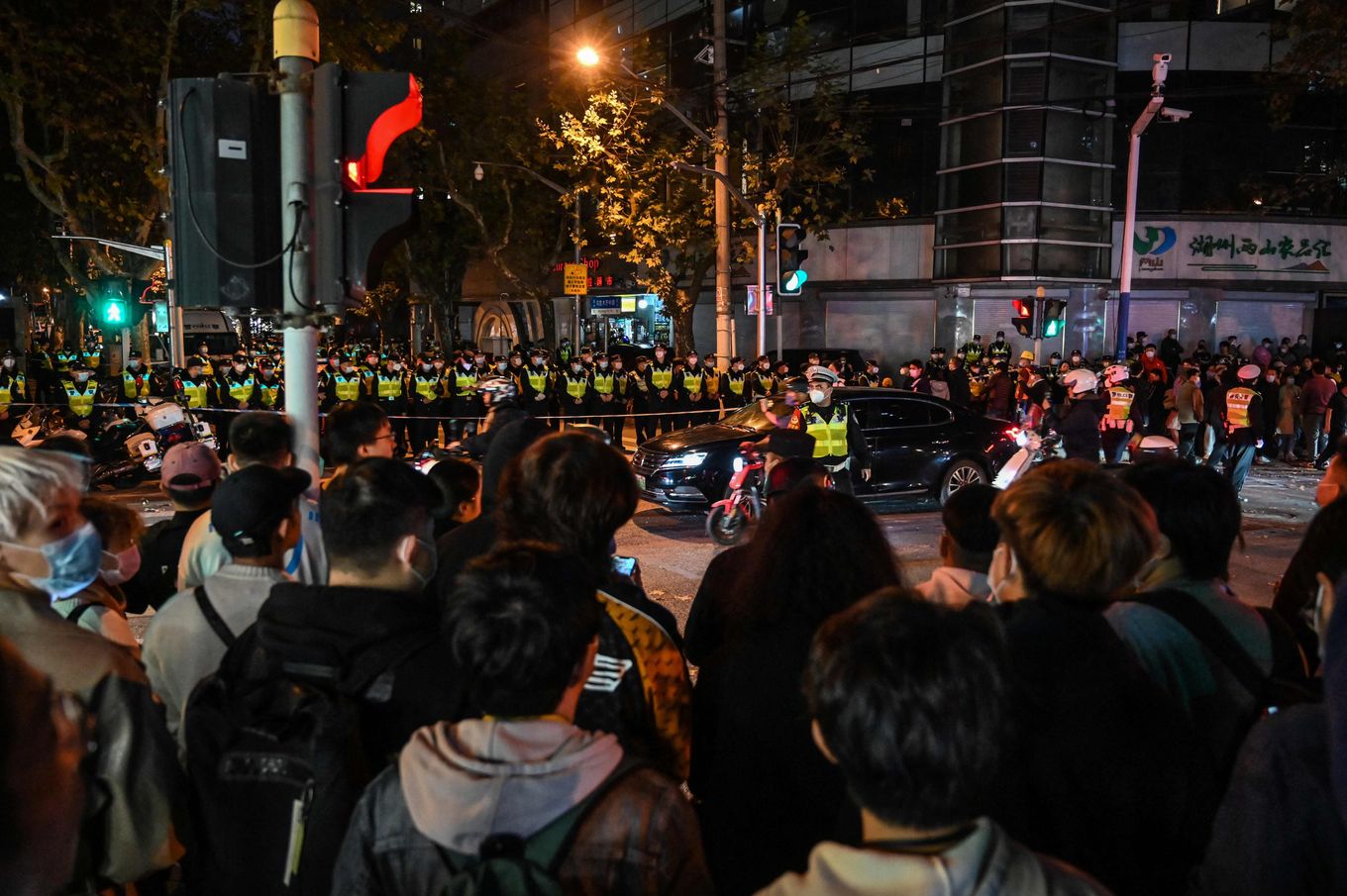 Police officers block Wulumuqi Road, named for Urumqi in Mandarin, amid protests in Shanghai on Sunday. (Hector Retamal/AFP/Getty Images) | Growing public anger Despite the government's censorship, stories of deepening hardships and collateral deaths connected to coronavirus controls made their way out of even the most closed-off parts of the country. So, too, did word of nascent protests. Hundreds of people in Lhasa, the capital of the heavily controlled Tibet Autonomous Region, took to the streets in October after almost two months of lockdown. "Isn't it natural for people to be fed up and demand change when they are locked up and treated like an animal?" asked Dorje Gyaltshen, a 26-year-old Tibetan restaurant worker who was stuck in his small, rented room for more than 80 days. That month, just days before a key party congress would give Chinese leader Xi Jinping another term as head of the ruling party, a lone protester expressed what few others dared to say: Zero covid was the failure of Xi and the ruling communist party. The protester, disguised as a construction worker, hung two large banners from the Sitong Bridge, an overpass in Beijing. They called Xi a "dictator and national traitor." They declared, "We want freedom, not lockdowns." The congress ended with no sign that the country's leaders would soon relax the government's coronavirus measures. Instead, they pledged "unswerving" commitment to them. An already slowing economy fell further off pace, and companies were ordered to stamp out coronavirus infections by sealing off their factories. At Foxconn's massive Zhengzhou plant, which makes half of the world's Apple iPhones, thousands of workers fled and others protested conditions meant to limit the spread of the virus. A deadly fire A fire ignited the demonstrations seen in recent days. The blaze broke out Nov. 24 in Urumqi, the capital of northwestern Xinjiang, a region where pandemic controls have been among the most strict. Seven adults and three children died. Residents accused firefighters of being slow to respond and blamed the coronavirus restrictions. Officials denied that, but many in the city were unconvinced. The first protest took place the next night as residents demanded an end to lockdown measures across the region. The surge of protests Within three days, demonstrations had spread thousands of miles away from Urumqi. As they gathered on campuses, in parks and on city streets, many held up blank pieces of paper — symbolic of the government's sweeping censorship. — Lily Kuo, Pei-Lin Wu, Vic Chiang and Lyric Li Read more: See what led protesters to a breaking point with China's 'zero covid' policy | | | Afterword | | | |


 Email
Email



No comments:
Post a Comment