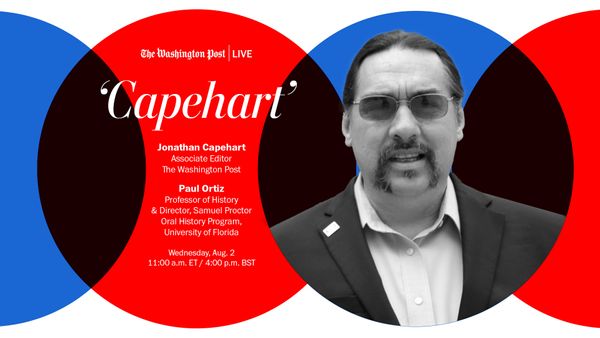
| Black history is undergoing a rapid reevaluation in Florida. The state has adopted laws restricting the teaching of race; repudiated an Advanced Placement course that critics blasted as "woke" and rejected some textbooks partly for alleged references to critical race theory. Then last week, the state's Board of Education adopted controversial new rules on what its students learn about the institution of slavery, including that enslaved Black people personally benefited from the skills they learned. While Florida governor and Republican presidential candidate Ron DeSantis has defended the standards, they have been widely criticized as inaccurate revisions of history. About US asked professors from across the country to weigh in on the new curriculum. The interviews were edited for length and clarity. Under the new standards, middle school students will learn "how slaves developed skills which, in some instances, could be applied to their personal benefit." Paul Ortiz, an African American and Latino history professor at the University of Florida: This is a complete farce. More often than not, enslaved African Americans taught critical skills to European Americans including cultivating rice and indigo, as well as skilled wood and ironworking — crafts that West Africans were more skilled at than most Europeans. The [new standards are] designed to make today's Americans feel good about slavery. Stephanie E. Jones-Rogers, associate professor of history at the University of California at Berkeley: It is vital that students understand that White Americans violently repressed African Americans' attempts to parlay the skills they possessed into wage labor after slavery was over. White Americans forced them … into highly exploitative agricultural work, labor for which they often did not earn a monetary wage. Shannon C. Eaves, assistant professor of history at the College of Charleston: It reeks of paternalism — the notion that enslaved people needed enslavers to provide for and "civilize" them — which was an ideology that slave owners adopted to justify their enslavement of Black people. I'd emphasize that enslaved people utilized everything they had access to — skills, tools, etc. — to survive, to seek freedom, to keep their families together, to fight off violence and sexual abuse. When high-schoolers learn about the 1920 Ocoee massacre, the Tulsa race massacre, Rosewood, and others, the instruction must include "acts of violence perpetrated against and by African Americans." Sybil R. Williams, director of African American and African Diaspora Studies at American University: Lynching, beatings, and other forms of torture were carried out to maintain anti-blackness that had long been the hallmark of the American economic and social system. So how does Black-on-Black violence in any way compare? I would defy anyone to find an incident of Black-on-Black violence that is tantamount to, by intent or impact, the Memphis Massacre, the Hamburg Massacre, the Colfax Massacre or the Tulsa Oklahoma Massacre. To equate the murder of one enslaved African to the systemic extrajudicial killings, maiming or torture of thousands when held in legal bondage and for hundreds of years thereafter is obscene. Jones-Rogers: It seems to me that the desire to underscore acts of violence that African Americans perpetrated in response to white supremacist acts of repression … is motivated by the desire to convince students of African Americans inherently violent nature and that white supremacist violence against them was warranted.  (Hannah Beier for The Washington Post) From laws to standards, Florida's governor is shaping and limiting what students can learn. By Hannah Natanson ● Read more » | | | | 



 Email
Email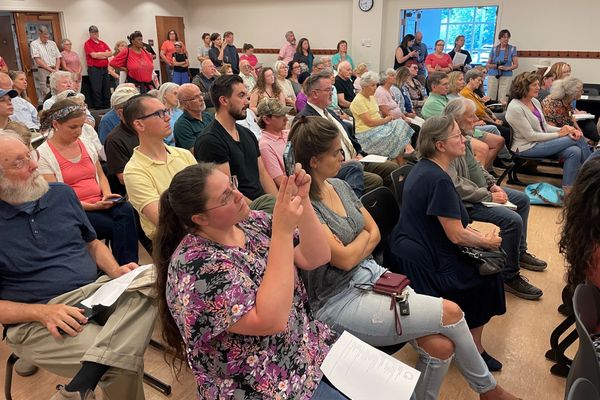



No comments:
Post a Comment