 (Photo illustration by Ron Charles/The Washington Post) | People are sizzling all across America, but it's not the heat, it's the inanity. This summer's feverish news sounds like something Thomas Pynchon might have dreamed up: - Testifying before Congress, former Air Force intelligence officer David Grusch suggested that the government is hiding alien spacecraft and an extraterrestrial corpse. (Americans respond: Meh.)
- Rep. Marjorie Taylor Greene (R-Ga.) flaunted pornographic photos of President Biden's son during a House Oversight hearing about alleged tax fraud. (Right-wing fixation with Hunter's nudes, explained.)
- Florida Gov. Ron DeSantis (R) touted the job-training benefits of slavery. We're probably only a couple of news cycles away from DeSantis reminding us that victims of lynching got to keep the rope. (All the ways DeSantis is trying to rewrite Black history.)
Meanwhile, in Texas it's literally and literarily approaching Fahrenheit 451. The state government now demands that every single title sold to a public school be rated for sexual content. The law is named the Restricting Explicit and Adult-Designated Educational Resources (READER) Act, which proves that even irony is bigger in Texas. This ludicrously intrusive act requires booksellers to "perform a contextual analysis of the material to determine whether the material describes, depicts, or portrays sexual conduct in a way that is patently offensive." Valerie Koehler, owner of Blue Willow Bookshop in Houston, tells me the new law "will be devastating." About a fifth of her business stems from educational sales. And she facilitates more than 200 school visits with authors every year. "We sell books to libraries. We sell books to school teachers. I don't know what they're doing with those books. I don't ask them. It's not my business. Our business is to sell them the books," Koehler says. "It is untenable for a bookseller to say, 'Yes, I can rate every one of the books in my bookstore.' It would cost us a fortune. It would cost us more than what we make in the bookstore on an annual basis. We don't know how we could possibly do it without putting ourselves out of business." Koehler bought the Blue Willow Bookshop in 1996. When I ask if she sells a lot of pornography to children, she lets out a laugh desiccated by months of politicians' hot air. "No, we don't. We don't sell pornography to kids." Indeed. Despite hysterical claims from the right, teachers and librarians are not filling Texas schools with pornography. But bigoted activists think books about LGBTQ+ people (and penguins) can fuel a politically expedient moral panic. Enough. On Tuesday, Koehler, along with other booksellers and groups including the Authors Guild and the Association of American Publishers, filed a federal lawsuit to strike down the READER Act. The plaintiffs claim Texas's "overbroad and vague" book-rating law compels booksellers "to express the government's views, even if they do not agree, and operates as a prior restraint, two of the most egregious constitutional infringements" (story). Alas, given the new deference to theocratic fanatics, the READER Act could very well withstand this legal challenge. If that happens, look for similarly proscriptive legislation to leach quickly across the whole simmering swath of anti-book states. Books to screens: - "Happiness for Beginners," starring Ellie Kemper and Luke Grimes, is streaming on Netflix. The rom-com, about a divorced schoolteacher who signs up for a wilderness hike, is based on a novel by Katherine Center. You may know her as the author of "The Bodyguard," which The Washington Post called one of "the funniest romance novels of 2022."
- The second volume of the third season of "The Witcher" is available on Netflix (trailer). The medieval fantasy series is based on short stories and novels by Polish writer Andrzej Sapkowski. This marks Henry Cavill's final appearance as Geralt of Rivia; Liam Hemsworth is set to play Geralt in the next season.
- The second season of "Good Omens," starring Michael Sheen as an angel and David Tennant as a demon, starts today on Prime Video (trailer). As the new storyline begins, the archangel Gabriel (Jon Hamm) is hiding in an old bookstore. The series is based on a comic novel written more than 30 years ago by Neil Gaiman and Terry Pratchett. Reviewing the book for The Washington Post back in 1990, Howard Waldrop prophesied, "It would make one hell of a movie. Or a heavenly one" (review).
Roald Dahl has become an Everlasting Gobstopper that never loses the flavor of controversy. Last week, the Roald Dahl Museum and Story Center in England posted a statement acknowledging that the late author's "racism is undeniable and indelible." Now, Dahl's 1964 children's novel "Charlie and the Chocolate Factory" is back in the news. A trailer for the upcoming movie "Wonka" shows Hugh Grant as a little Oompa-Loompa. George Coppen, a British actor with dwarfism, has publicly objected: Casting Grant in that part steals one of the few high-profile roles left for people like him. Speaking to me from his home in Derby, England, Coppen says, "If they did a film about Nelson Mandela and got a white bloke to play him, there'd be an uproar. So why is there not the same uproar now with an average actor playing a dwarf character?" Coppen appeared as Sweet Cupid in Netflix's "The School for Good and Evil," and he was also in "Willow" on Disney Plus, but he says acting opportunities are vanishingly rare. "Change is happening, but incredibly slowly," Coppen says. "While we're not being offered the everyday roles, we still need the traditional roles like your gnomes, your goblins, your elves, just to get some money, just to pay the bills. If people like Hugh Grant are going to come along and push us out, what's next? Are we going to be replaced in 'Snow White and the Seven Dwarfs'? Where does it stop?" In the trailer, Grant, who's been digitally re-engineered to appear about two feet high, says, "I will have you know that I am a perfectly respectable size for an Oompa-Loompa." Coppen would respectfully disagree. He admits, though, that the situation is fraught, given the potentially degrading quality of some of the roles traditionally offered to people with dwarfism. "But this is our choice whether we want to do these jobs," he says. "People who can't relate to us in any way deciding for us? No. We've got a voice just like you have. Let us choose." "Personally, if my agent had texted me saying, 'Would you be up for auditioning for an Oompa-Loompa?,' I would have jumped at the chance, because an Oompa-Loompa is such a well-known character in cinema history." But the Oompa-Loompas are also stained with Dahl's racist attitudes (story). The original figures were African pygmy slaves. (DeSantis: "Think of the candy-making skills they learned!") Coppen says an insightful actor can effectively push back on the demeaning elements lingering in such roles. He points to Deep Roy, who portrayed all of the Oompa-Loompas in Tim Burton's 2005 version of "Charlie and the Chocolate Factory." "We need our voice to show you we can act," Coppen says. "We want to do these roles." "Wonka" will be released in December.  John Steinbeck's former home in Sag Harbor, N.Y. (Photo by Sotheby's International Realty) | East of Eden, Northeast of Austin. John Steinbeck's former home in Sag Harbor, N.Y., has become a retreat for writers. The Michener Center at the University of Texas announced the creation of a program to preserve the legacy of the Nobel Prize-winning author and provide an inspiring place for new and established writers to work. Residents selected by the university will offer public readings and workshops to people in Sag Harbor and interact with students on the UT-Austin campus. (The university holds a major collection of Steinbeck's papers donated by the author's late wife, Elaine.) The first Steinbeck Writers' Retreat resident will be Pulitzer Prize-winning playwright Ayad Akhtar, whose novel "Homeland Elegies" was named one of the top 10 books of 2020 by The Washington Post. Steinbeck lived at the Sag Harbor "cottage" during the final years of his life, when he wrote "The Winter of Our Discontent" and "Travels with Charley." He died in 1968. The preservation of Steinbeck's house as an academic workplace and literary shrine almost didn't happen. In 2021, Steinbeck's heirs put the "cottage" up for sale for $17.9 million, and then cut the price to $16.75 million. But Kathryn Szoka, co-owner of Canio's Books in Sag Harbor, was determined to keep the property from slipping away forever into private hands. After she and others rallied public support, the Town Board of Southampton contributed $11.2 million to a nonprofit called the Sag Harbor Partnership, which bought the property earlier this year for about $13.5 million. Szoka is an avid fan of Steinbeck's novels. "The combination of his really being involved in the town with the fact that he received the Nobel all spoke to me about why we needed to preserve his home," she told me. "'The Winter of our Discontent' talks exactly about issues we're facing today in Sag Harbor and across the nation. . . . He could see what was happening." Members of the public can tour the grounds of Steinbeck's house on Saturday afternoons. On select holiday weekends, the house is open, too. All visits are free but require reservations. 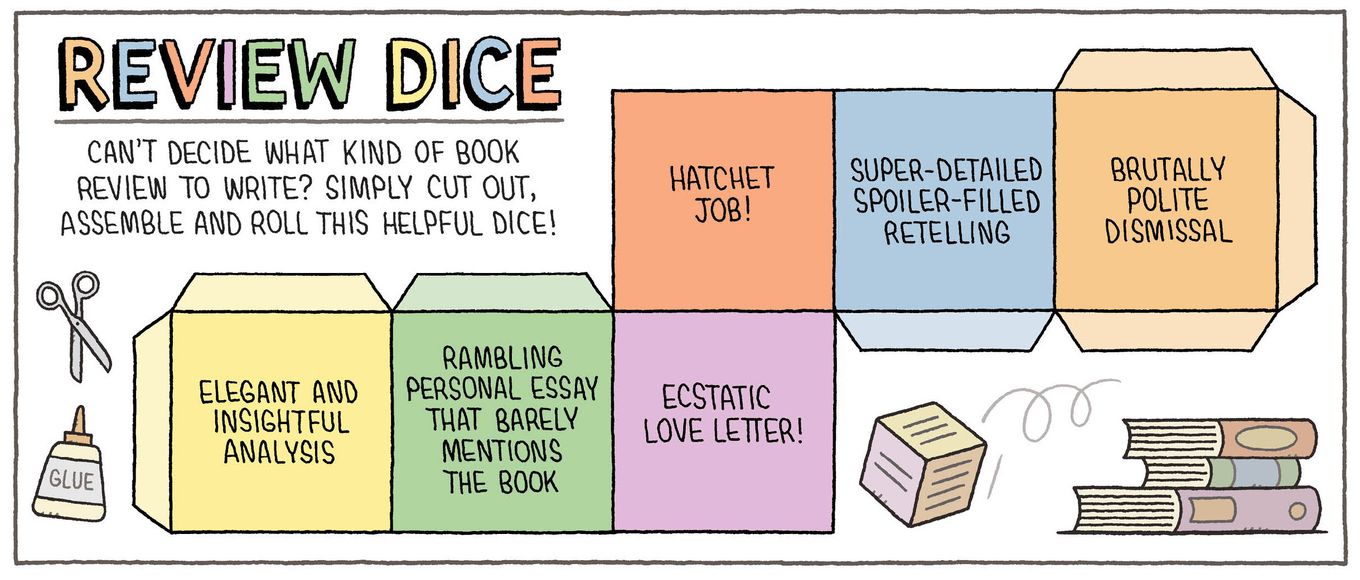 From "Revenge of the Librarians," by Tom Gauld (Drawn & Quarterly). | Literary prizes and honors: - "The Botanist," by M.W. Craven, was named the Theakston Old Peculier Crime Novel of the Year. This is the fifth novel in Craven's series about Detective Sergeant Washington Poe.
- Barbara Kingsolver's novel "Demon Copperhead" and Darryl Pinckney's memoir "Come Back in September" won the James Tait Black Prizes for fiction and biography, respectively. The two awards, worth about $13,000 each, are conferred by the University of Edinburgh. The Washington Post named "Demon Copperhead" one of the top 10 books of 2022. And last year, our critic Michael Dirda wrote, "No reader will be indifferent to the gossipy stories in 'Come Back in September'" (review).
- The Academy of American Poets awarded $50,000 grants to more than 20 writers who serve as poets laureate of states, counties and cities. The money will be used to sponsor workshops, readings, festivals, anthologies and more. Since 2019, the Academy has given $5.45 million in fellowships to 105 poets laureate across the country. (One might live near you.)
- "Revenge of the Librarians," by London-based cartoonist Tom Gauld, won the Eisner award for Best Humor Publication at Comic-Con in San Diego. Gauld is a great wit; I regularly send out postcards of his literary cartoons. The Washington Post included "Revenge of the Librarians" in last year's bookish gift guide. (Full list of 2023 Eisner award winners.)
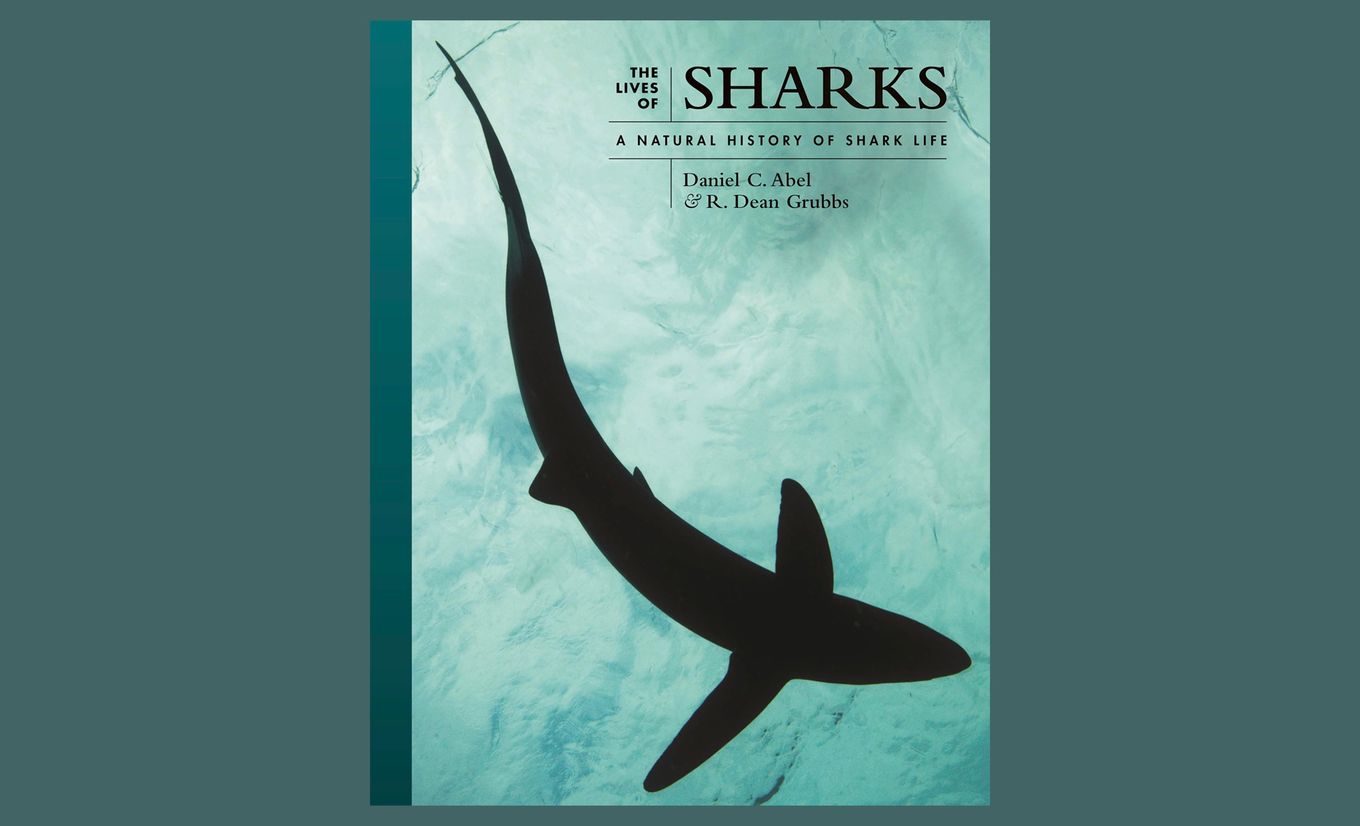 (Princeton University Press) | We can all remember a professor who believed in throwing students to the sharks. But Daniel C. Abel and R. Dean Grubbs throw their students to actual sharks — during a feeding frenzy. That life-changing lesson, which they've been teaching for almost 30 years, is part of their biology course at the Bimini Biological Field Station in the Bahamas. When I ask if the sharks ever attack his students, Abel says, "That's why we bring 15." You're gonna need a bigger sense of humor. In fact, Abel assures me they've never lost anyone, though he did once wrench his back trying to catch a student who fainted. "Am I afraid to go in the water?" he asks rhetorically. "Yes, I'm afraid of getting hit in the head with a jet ski or a surfboard or maybe a rip current taking me out or bacteria in the water — but not the sharks." (Scared of sharks? Take our quiz.) While some biologists might feel exasperated with the lurid melodrama of Discovery Channel's "Shark Week," Abel says he "feeds off" the popular enthusiasm. "We use it as motivation to take that group that is so enthralled with these magnificent beasts and give them the information they need." (One of Abel's former students, the biologist Craig O'Connell, is a presenter on "Shark Week.") Sharks are Abel's academic specialty, but he has a larger goal. "If I can take a student on the water on one of my shark research and training cruises and introduce them to the beauty of sharks in their natural environment, my hidden agenda is to get them to care about the planet as a whole and every living organism on it." In September, Abel and Grubbs will publish an enthralling book called "The Lives of Sharks: A Natural History of Shark Life" (Princeton University Press). Lavishly illustrated with big color photos and drawings, the book covers shark biology, behavior and ecology in prose that's authoritative but highly accessible to anyone bitten by shark fever. The last chapter, "Sharks and Us," begins by "celebrating the enormous reservoir of respect and even veneration with which sharks are viewed by large numbers of people." But the authors conclude with a survey of the devastating effects of human behavior on these awesome marine animals. Sharks may terrify us, but we're far more dangerous to them. 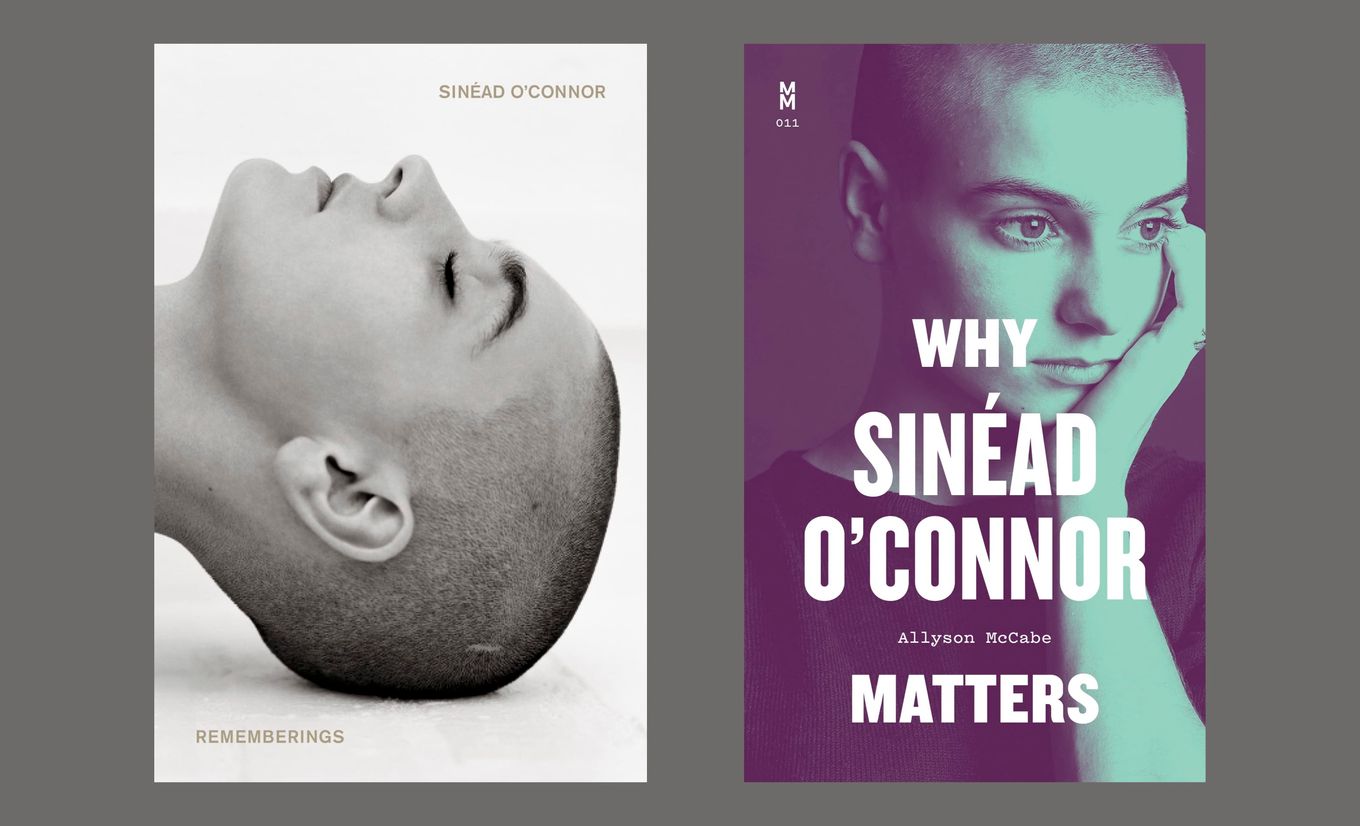 (Dey Street Books; University of Texas Press) | Even if you weren't watching "Saturday Night Live" on Oct. 3, 1992, you can remember seeing Sinéad O'Connor rip up a photo of Pope John Paul II and say, "Fight the real enemy." Epochal events are like that: They colonize memory. O'Connor, a soft-spoken singer-songwriter who fearlessly condemned abuses of power, was often the subject of harsh condemnation and mockery steeped in misogyny. But since her death was announced on Wednesday, tributes and reassessments have flooded the internet. (In a world afraid of music, Sinéad O'Connor didn't flinch.) In a review for The Washington Post, Allison Stewart described O'Connor's 2021 memoir, "Rememberings," as a "moving, bawdy, open-wound of a book" (review). After surveying the shocking list of abuses, tragedies and struggles that O'Connor endured, Stewart concluded, "She is long overdue for the kind of cultural reconsideration, the collective atonement, that Britney got." Enter cultural critic Allyson McCabe, who now looks eerily prescient. In May, McCabe published a thoughtful book called "Why Sinéad O'Connor Matters." It's part of the Music Matters series from the University of Texas Press, which offers "concise books that make outsize arguments for the meaning and legacy of a wide range of popular artists." In her deeply personal explanation of O'Connor's importance, McCabe also illuminates the challenging position of female artists and the toxicity of our media environment. A former English lecturer at Yale University, she's that rare critic who can make even the most intellectual analysis feel intimate, colloquial and witty. (I first heard about "Why Sinéad O'Connor Matters" on Sarah Marshall's delightfully provocative podcast You're Wrong About.) "She was right about the role of the Catholic Church in condoning and covering up child abuse," McCabe writes. "She was right about the music industry's fixation on defining success in purely commercial terms. She was right about its racism, and the way it uses and silences women, pimping them out when they're young and abandoning them when they're not. Most of all, she was right to seek and speak her own truth, even though she's paid — and continues to pay — a terrible price for it."  (The Washington Post) | For years, I have disparaged the importance of spelling, the same way I disparage all things I can't do well, like sports, driving, home maintenance, sleep, foreign languages, cooking, etc. But this month, despite myself, I've become obsessed with Keyword, an innovative word game from The Washington Post. As a terrible speller, I find Keyword equally addictive and maddening (madening? maddenning?). The game's tagline is "One word to spell 'em all." It's like a mini-crossword puzzle in three dimensions — and it's timed! You can find Keyword and other clever challenges by subscribing to Game Break, The Washington Post's newsletter about games, hosted by Amy Parlapiano. How much does it cost? It's _R_E. (Sign up here.)  (Graywolf Press) | Sally Wen Mao's new collection, "The Kingdom of Surfaces," looks across history but stays rooted in personal experience. Her poems challenge romanticized concepts of oppression embedded in art and culture. Some of the poems are artfully arranged so that the lines form the shape of a vase — just another way Mao creates beauty and interrogates it. The Peony Pavilion In the concrete garden, he appears.
Before long I'm holding his hand.
We are in Hangzhou, walking the length of the famous lake. He is a young scholar
in a full cotton robe. We kiss under the willows, then he pulls down my pants against the pink
pagoda wall. The cameras watch.
It happens so fast. It's getting dark already. Dank. The water under the bridge
rips, red. At West Lake, sunset makes us sweat like horses. The famous opera
originating here is about a woman who turns
into a snake: The White Maiden Locked for Eternity in the Leifeng Pagoda.
I think of a girl from another opera who meets a phantasmic suitor in a dream.
In the garden of rotten roses they meet, part.
She pines and pines, then dies from longing. At a bar called Peony, my friend confesses
that most intimacy in her life she has never fully consented to. Can intimacy be forced?
Sometimes I submit to someone else's desires
to fulfill my perceived function to them, which is bleak. She drinks from her mojito
and laughs. Men bump into her on purpose, trying to flirt. I want to stand on the stool and spill
tequila on their scalps. The kindest men are always the ones in operas. Or the ones I make up,
dream of. I always wake up. But I'm not willing
to die from that disappointment. "The Peony Pavilion" copyright © 2023 by Sally Wen Mao. Reprinted from "The Kingdom of Surfaces" with the permission of Graywolf Press. All rights reserved. Poets, take note: Scribner, publisher of the Best American Poetry series, will accept unsolicited poetry collections during the month of August (up to 300 manuscripts). According to the Scribner Poetry editors, this program is intended "to lower some of the hurdles that poets experience when seeking a publisher." Submissions must be previously unpublished collections written in English by writers 18 or older who do not have an agent (details). 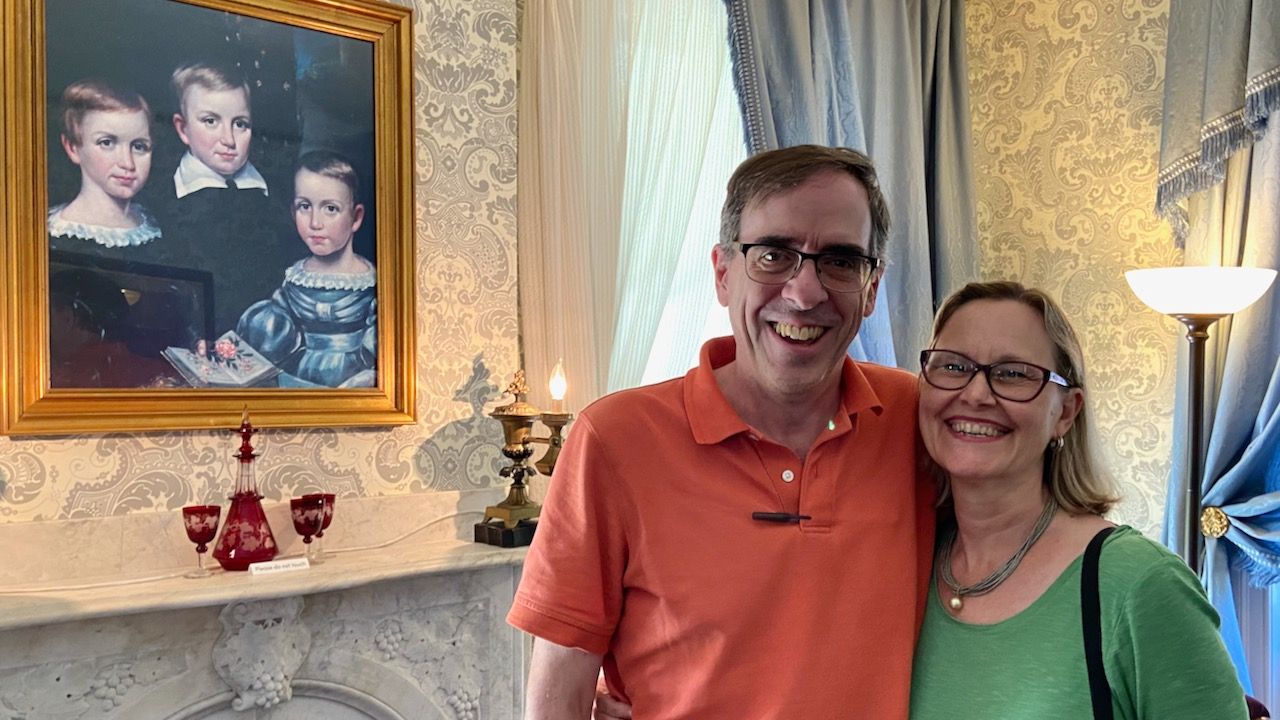 The Dickinson children (left) with Ron and Dawn Charles (right) at Emily Dickinson's home in Amherst, Mass., on Saturday. (Photo by Becky Lockwood/Emily Dickinson Museum) | "I taste a liquor never brewed." Last Saturday, I finally made a pilgrimage to Emily Dickinson's house in Amherst, Mass., and the experience was even more moving and enlightening than I'd imagined it would be. The house had been closed for more than two years during the pandemic for a painstaking restoration. New wallpaper was created from tiny scraps found behind molding. Paint colors were determined by analyzing layers of pigment on the walls. The carpet in the living room, with its riot of flowers, was designed by following a comment in a letter by a mid-19th-century visitor. And period pieces donated from the set of the Apple TV show "Dickinson" are placed subtly around the rooms. The overall effect is extraordinary. The house appears not as a finely preserved antique but as it would have looked to Emily and her family: bright, fresh, filled with light. Brilliant docents stationed in every room eagerly answered my questions about everything from the poet's interest in botany to her changing attitudes about publication. (We keep revising our idea of Dickinson.) And of course, there is nothing like standing in Emily Dickinson's bedroom and staring at the tiny desk where she wrote, "This is my letter to the World / That never wrote to Me —." Meanwhile, send any questions to ron.charles@washpost.com. You can read last week's issue of the Barbie-mania newsletter here. Tell friends who might enjoy this free newsletter that they can get it every week by clicking here. And remember, you can find all our books coverage, updated every day, here.
Interested in advertising in our bookish newsletter? Contact Michael King at michael.king@washpost.com. | 


 Email
Email




No comments:
Post a Comment