 (Photos by Justin Tsucalas; food styling by Nichole Bryant for The Washington Post) | Week 8: Bowl goalsDinner was always served on big white plates when I was growing up. In my family, we even had a navy blue plate that said, "You're the best" scrawled in white script, with a big red heart. And on days when I did something particularly noteworthy, it would magically appear at my seat. (Of course, my sister and I would fight over who clearly deserved the plate of honor each day.) Back then, a proper dinner deserved a proper plate. Today, when I look at the vessel Alex and I use to serve dinner, nine times out of 10 it's a bowl. The large, white dinner plates from our wedding registry rarely make it out of the cabinet. Instead, poke bowls, nourish bowls, grain bowls, stir-fries, soups, stews and ramen: They each end up in a bowl. A minute of scrolling on Pinterest shows the same theme: Overflowing, vibrant bowl meals are everywhere. What is it about the bowl that makes us swoon? Perhaps it's because a bowl is loose, fun and creative: the antithesis of those square meals of our youth. Or maybe it's because bowls make a jumble of odds and ends from your refrigerator seem cohesive and intentional. Whatever it is, throwing great ingredients into a bowl is a simple way to eat good-for-you food in style. — Sonja  | This week's recipes | Vegan Sushi Bowls
Why spend the effort rolling sushi when you can enjoy it in a bowl instead? Nori shiitakes and wasabi edamame bring big flavor. Grain Bowls With Cucumber-Dill Sauce
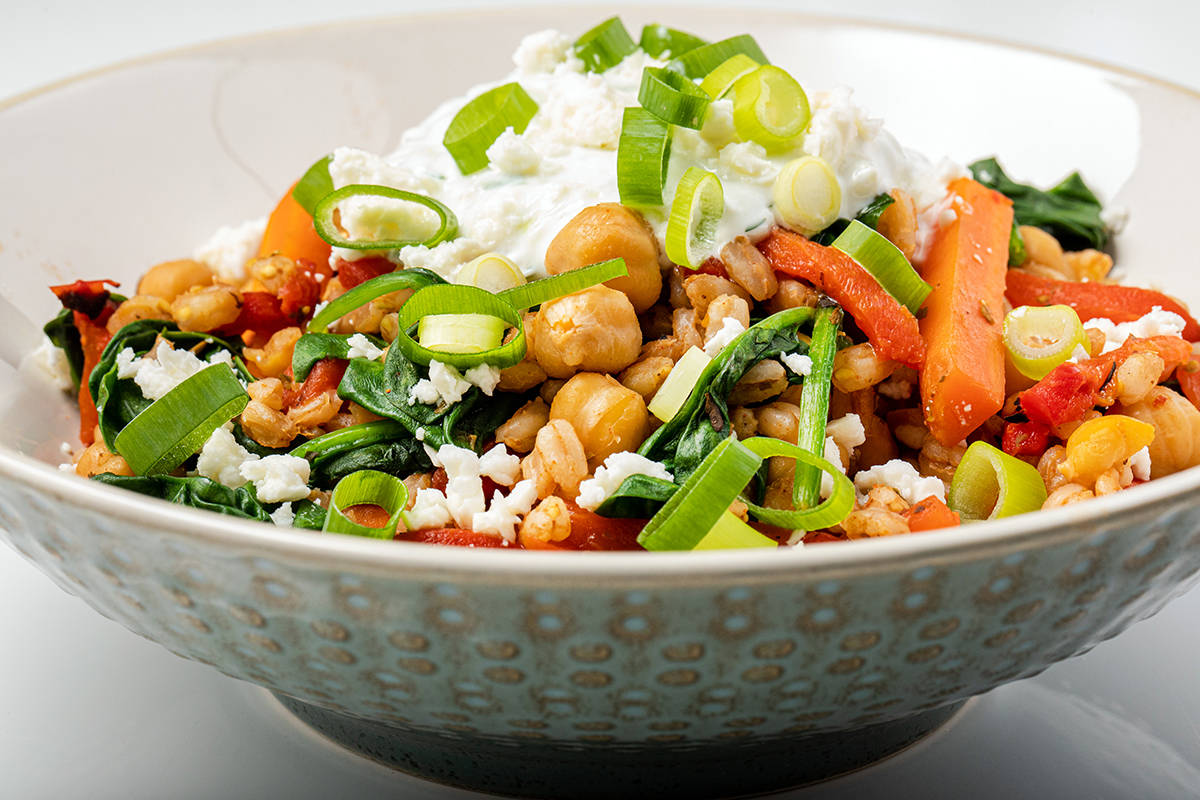
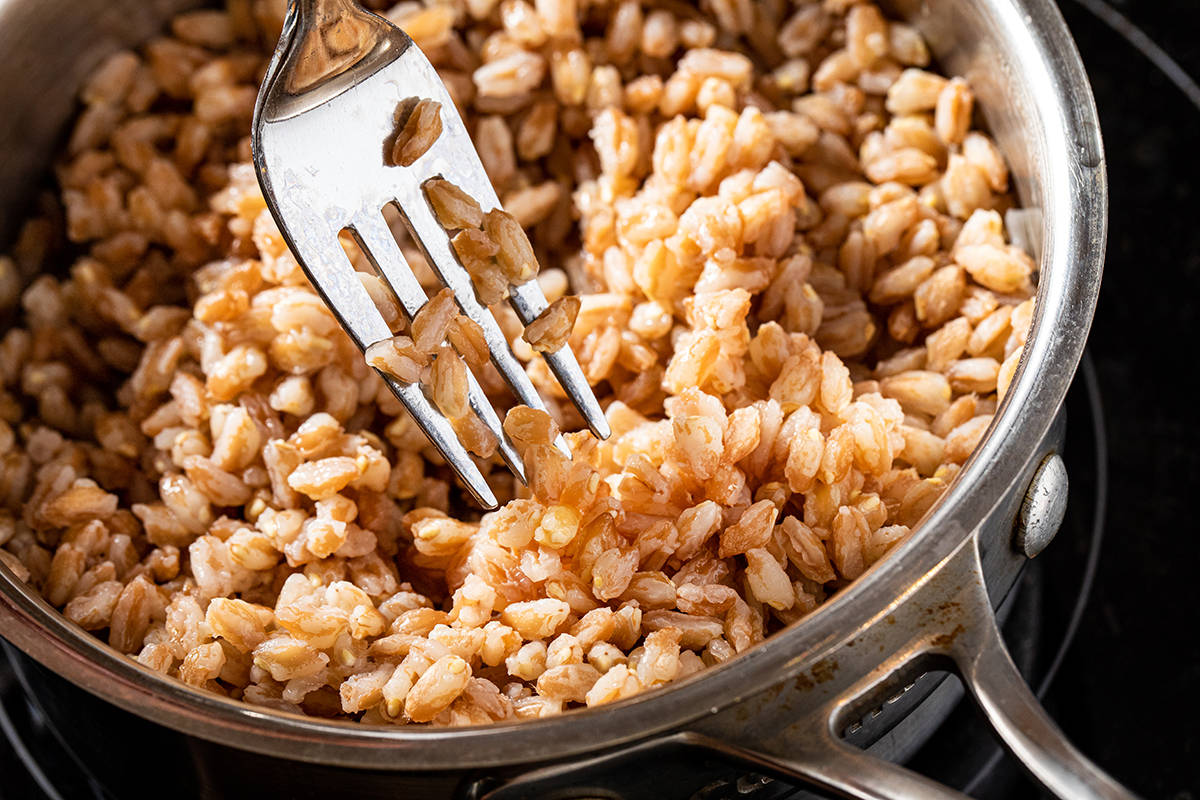
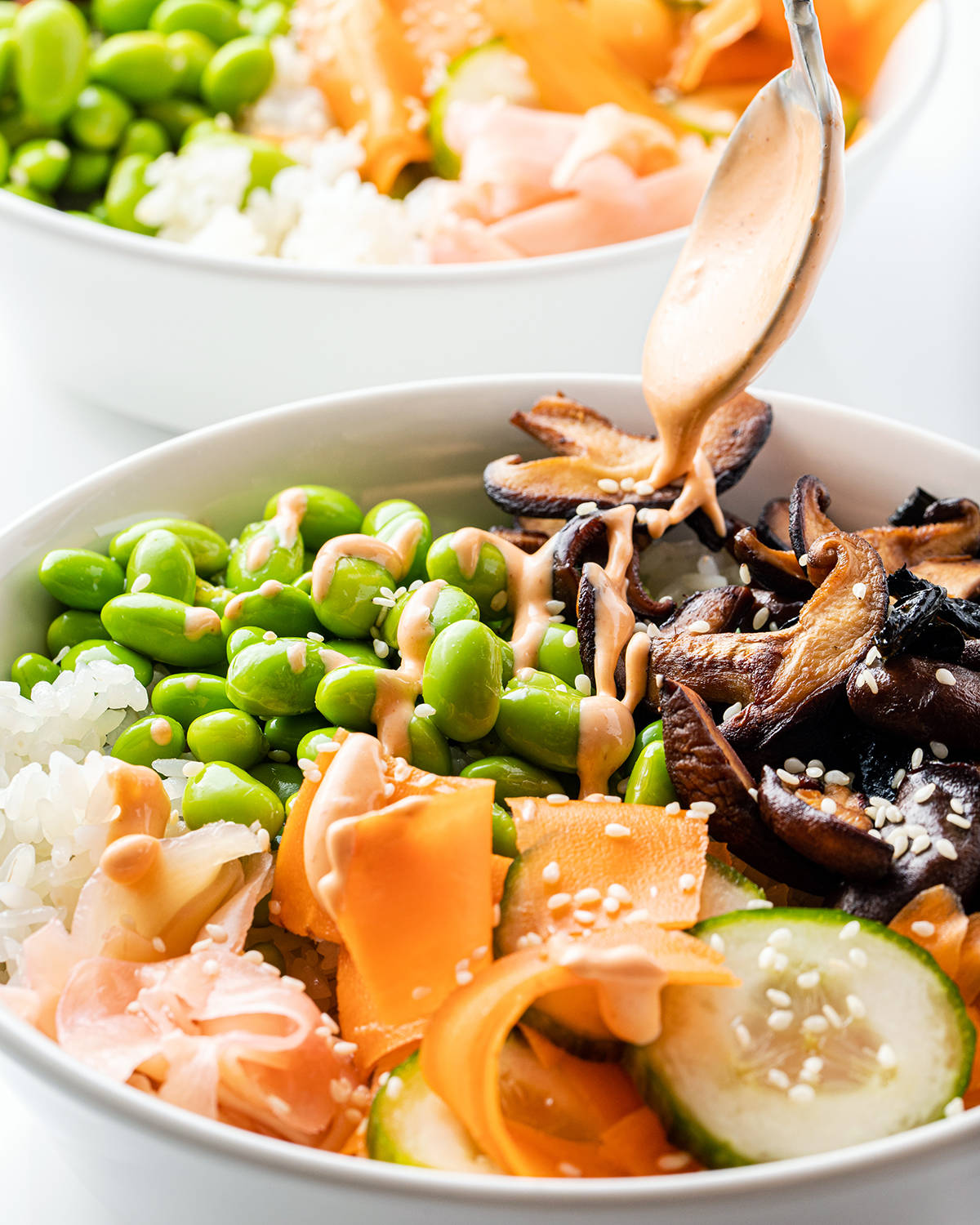
Here's humble whole-grain farro, dressed up and featuring a confetti of veggie and feta chunks, all tied together with a silky yogurt-dill sauce.  | Your shopping list | Click this link for an easy-to-save shopping list that includes ingredients for both recipes.  | How to get your grains | When we started eating more vegetables, we began to cook something we had never considered before: whole grains. They are full of fiber and nutrients, and help to make plant-based meals filling. We started with well-known grains, such as brown rice, then moved on to farro, quinoa and millet. Bowl meals are a simple way to load up on these grains, and this week's recipes are built around them. Our hope is that you'll try them, love them and use them as inspiration for creating your own bowls without a recipe. Cheat sheet: Cooking Whole Grains 101Farro 1 cup uncooked farro | 3 1/2 cups water Toast it: Heat 1 tablespoon olive oil until shimmering in a medium saucepan over medium heat. Stir in the farro and toast for 3 to 5 minutes. Cook it: Add the water and 1/4 teaspoon kosher salt. Bring to a boil, then simmer until tender, with just a little chew, 15 to 25 minutes. Drain excess liquid. Quinoa 1 cup uncooked quinoa | 2 cups water Rinse it: Rinse the quinoa in a strainer. Cook it: Combine the quinoa, water and 1/2 teaspoon kosher salt in a medium saucepan. Bring to a boil, then reduce the heat so that the water bubbles gently. Cover and cook for 13 to 17 minutes until all the water is absorbed and the quinoa is fluffy. Steam it: Remove from the heat and let stand, covered, for 5 minutes. Bulgur wheat 1 cup uncooked bulgur wheat | 1 cup water Boil the water. Let it stand: Pour the boiling water over the bulgur in a heatproof bowl. Allow it to stand for about 15 minutes, until the water is absorbed and the bulgur is tender. Millet 1 cup uncooked millet | 2 cups water Toast it: Add the millet to a dry pan and toast for 2 to 3 minutes. Cook it: Reduce the heat and add the water. Bring to a boil, then reduce the heat. Cover and simmer, just bubbling, for about 17 minutes, until the water has been completely absorbed. Steam it: Remove from the heat and allow to steam for 5 minutes. Uncover and add 1/4 teaspoon kosher salt.  | Recipes | Vegan Sushi BowlsMaking your own sushi on a weeknight might sound near impossible, but if you cut out the rolling, it becomes much more doable. This composed bowl has wasabi edamame, nori-scented shiitake mushrooms and tangy quick-pickled carrots and cucumber. The rice is even prepared "sushi-style," mixed with the traditional vinegar, sugar and salt. Garnish with pickled ginger, sesame seeds and spicy mayo, and every bite is a sushi roll. Want to add seafood? Chopped cubes of sushi-grade ahi tuna or salmon would be just right. Look for wasabi in the international foods aisle in your grocery; it should be available in a tube, or as a powder you can rehydrate with water. Sheets of nori (dried seaweed) should also be available there; you can freeze what's left in the package. If you can find pickled ginger, it makes for a nice garnish (optional). Quick pickles can be refrigerated for up to 2 days. The rice is best served the day you make it. Refrigerate leftovers for up to 2 days. For easy printing and scaling, view this recipe at washingtonpost.com/recipes. Ingredients2 servings
Prep time: 15 minutes. Cook time: 25 minutes. 1 medium carrot, scrubbed well and cut into ribbons with a vegetable peeler, then cut into 2-inch pieces
2 tablespoons plus 2 teaspoons plain rice vinegar
1/2 teaspoon kosher salt
1/2 cup uncooked sushi rice, rinsed in a colander until the water runs clear
3/4 cup water
2 teaspoons sugar
1 cup frozen shelled edamame
1 tablespoon low-sodium soy sauce
1/4 teaspoon plus 1/8 teaspoon prepared wasabi paste or powder
1 tablespoon oil, such as pure sesame oil or peanut oil
4 ounces fresh shiitake mushrooms, sliced
1/2 sheet sushi nori, cut into 1/4-inch-wide strips with kitchen shears
2 tablespoons mayonnaise, for serving
1/2 teaspoon Sriracha, for serving
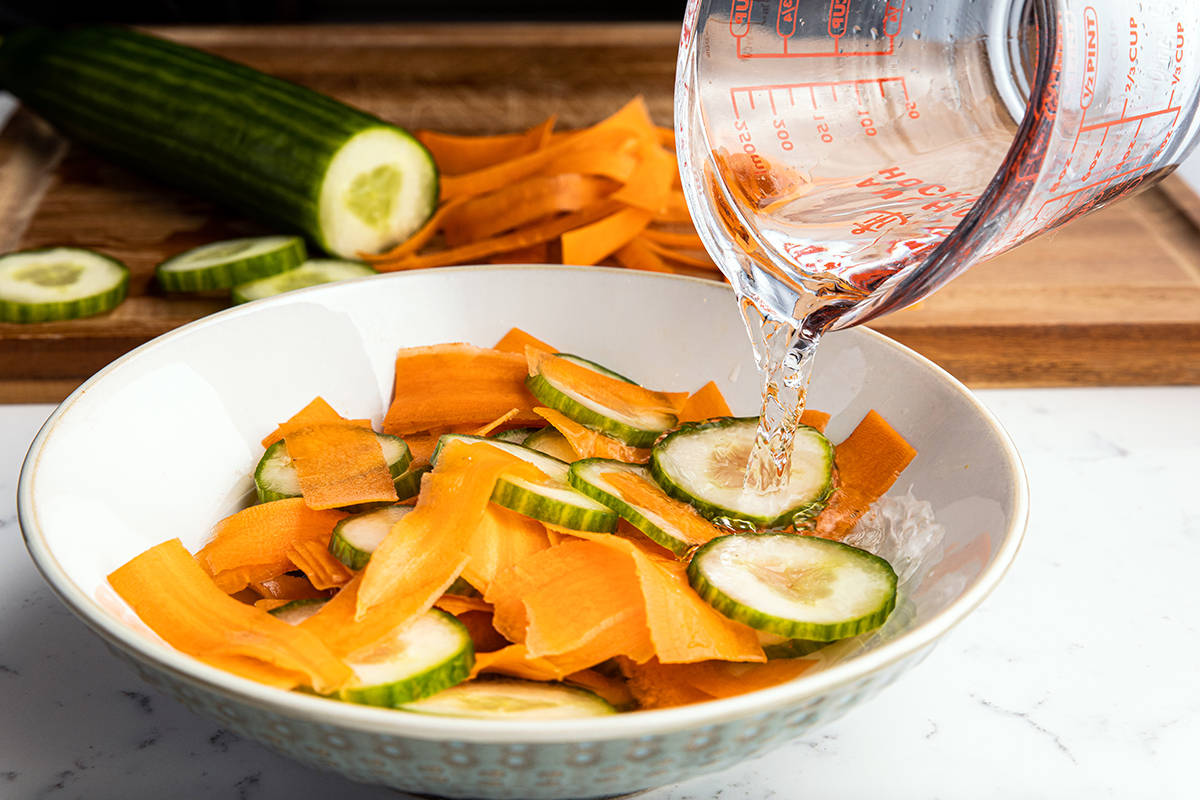
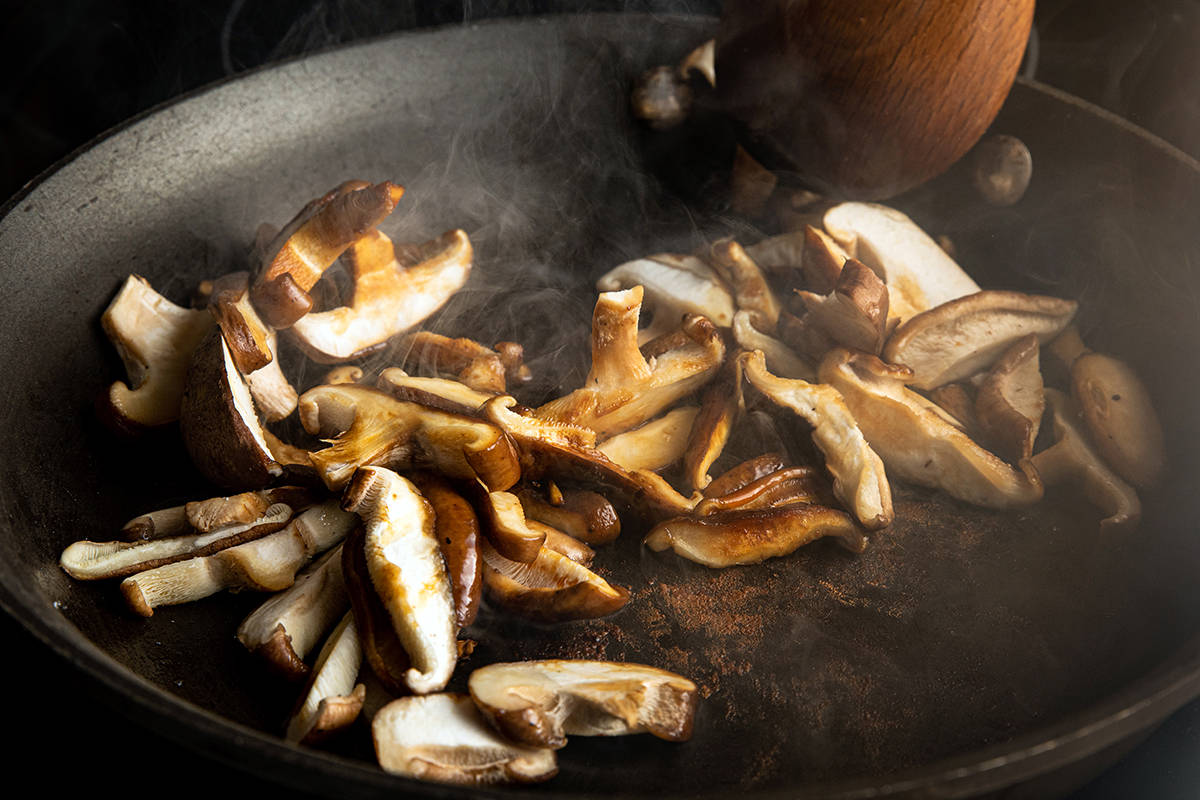
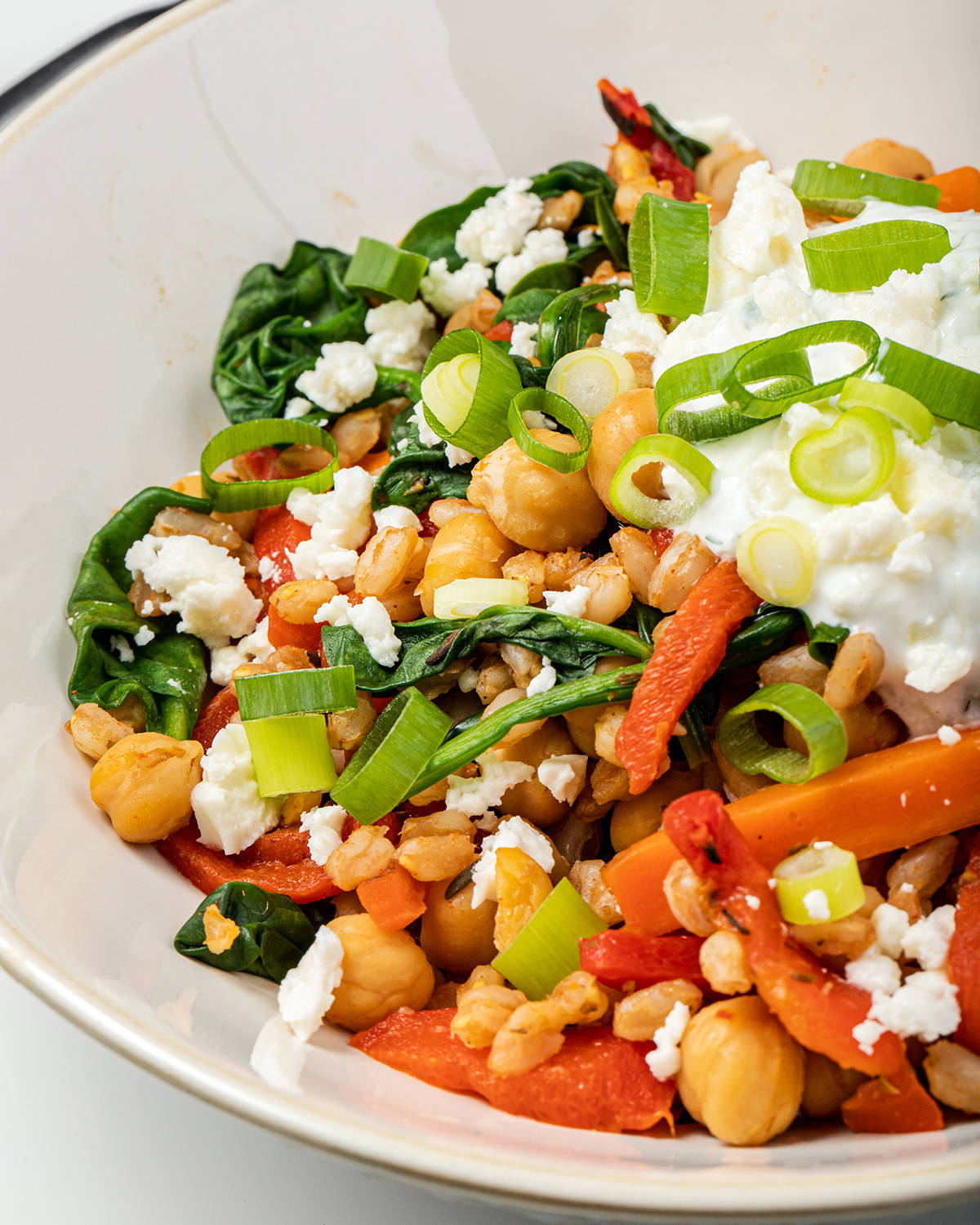
1 scallion, thinly sliced on the bias, for serving StepsStart with the quick-pickled veg: These will marinate while we're making the rest of the components. Toss together the cucumber, carrot, 2 tablespoons of the rice vinegar and 1/4 teaspoon of the salt in a medium bowl; let the mixture sit for at least 20 minutes while you make the remainder of the recipe. (You can also make these in advance and refrigerate.) For the rice: Stir together the rice and water in a small saucepan over medium-high heat. Bring it to a boil, then reduce the heat to low. Cover and cook, gently bubbling, for 15 to 20 minutes until the water is completely absorbed. Meanwhile, stir together the remaining 2 teaspoons of rice vinegar, the sugar and the remaining 1/4 teaspoon salt in a bowl (the sugar and salt does not fully dissolve, which is okay). Remove the rice from the heat, then drizzle the salty-sweet vinegar mixture over the rice and stir it in. On to our wasabi edamame: Fill a large skillet halfway with water, over medium heat. Once it is gently bubbling, add the edamame and cook until it becomes bright green and warmed through, about 3 minutes. Drain, then stir in 1 1/2 teaspoons of the soy sauce and the wasabi. The bowl will smell surprisingly spicy at first, but don't worry! The flavor mellows and has only a subtle kick. Now for the mushrooms: Wipe out the same skillet you used for the edamame. Add the oil and the remaining 1 1/2 teaspoons of soy sauce. Heat the liquids over medium-high heat, then add the mushrooms and nori strips. Cook for 3 minutes, until the mushrooms are tender. Taste, and add salt as needed. Ready for the sushi assemblage? No rolling required! Stir together the mayo and Sriracha in a small bowl to make the spicy mayo. Place some cooked sushi rice in the bowl, artfully add small piles of pickles, edamame and mushrooms, and garnish with sliced scallions and spicy mayo. (Other optional garnishes, if you have them on hand: pickled ginger and a sprinkle of sesame seeds.) Nutritional facts (per serving): Calories: 370; Protein: 15 g; Carbohydrates: 59 g; Fat: 11 g; Saturated Fat: 2 g; Cholesterol: 0 mg; Sodium: 600 mg; Fiber: 8 g; Sugar: 10 g. Grain Bowls With Cucumber Dill SauceHere's a satisfying meal of whole grains that looks — and tastes — gourmet. The base is farro, an ancient grain that's chewy like barley but is quicker to cook. It's jumbled with chickpeas and veggies, then smothered in a mind-blowing cucumber-dill sauce. It's a bright and creamy coating that you'll want to try on just about anything: as a dip for veggies, a sauce for grilled fish and on a falafel sandwich. To make this vegan, substitute the Cilantro-Cashew Sauce from last week's falafel sandwich. Make the cucumber-dill sauce and farro in advance or store leftovers refrigerated for up to 2 days. Reheat the farro in a skillet until warmed through; add a little olive oil if it's dry. For easy printing and scaling, view this recipe at washingtonpost.com/recipes. Ingredients3 servings
Prep time: 10 minutes. Cook time: 25 minutes. For the grain bowls
2 tablespoons extra-virgin olive oil
6 ounces (1 cup) uncooked farro
3 1/2 cups water
1/2 teaspoon kosher salt, or more as needed
1 medium carrot, scrubbed well and cut into 2-inch sticks about ¼-inch thick
One 15-ounce can low-sodium chickpeas, rinsed and drained
1 roasted red pepper, thinly sliced (drained, from a jar; 1 cup)
2 teaspoons low-sodium soy sauce
2 teaspoons dried oregano
1/2 teaspoon granulated garlic (a.k.a. garlic powder)
1 teaspoon Spanish smoked paprika (pimentón)
2 cups baby spinach leaves
2 scallions, thinly sliced crosswise
1/2 cup feta cheese crumbles For the cucumber-dill sauce
1/2 cup grated English (seeded) cucumber
1 cup organic plain, whole-milk yogurt
1 tablespoon chopped fresh dill
1 tablespoon fresh lemon juice
1/8 teaspoon granulated garlic (a.k.a. garlic powder)
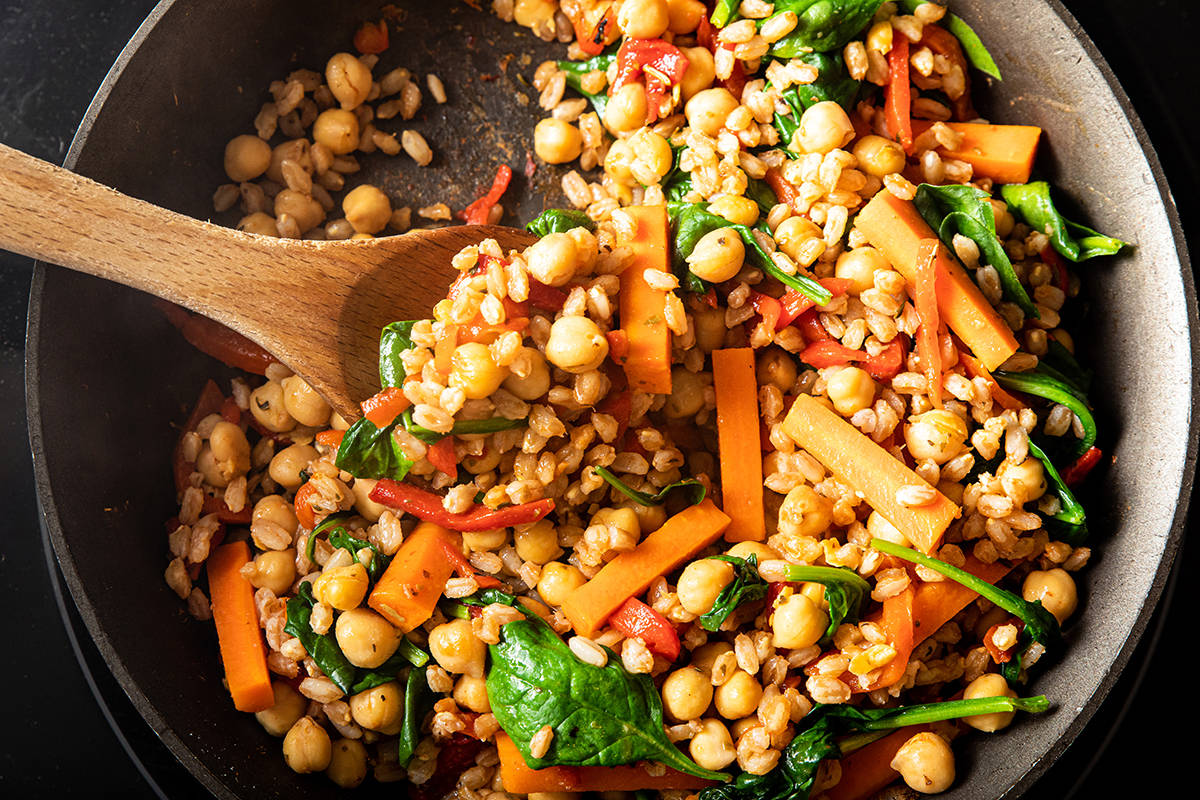
1/4 teaspoon kosher salt StepsFirst, get that farro going: Heat 1 tablespoon of the oil until shimmering in a medium saucepan over medium heat. Stir in the farro and toast for 3 to 5 minutes, until it's fragrant and you hear it start to pop. Add 3 1/2 cups of the water and 1/4 teaspoon of the salt. Increase the heat and bring to a boil. Then reduce the heat and cook, bubbling at the sides, until the farro is tender, with just a little chew, 15 to 25 minutes. The exact timing depends on the type of farro (see Note). Remove from the heat, draining any excess liquid. Meanwhile, let's make that wonderful sauce: Squeeze all the excess liquid you can from the grated cucumber; you'll be left with about 1/4 cup of cucumber. Mix that together with the yogurt, dill, lemon juice, garlic powder and salt in a medium bowl. Sneak a little taste (so good, right?). Refrigerate until serving. Back to the vegetables for the grain bowl: Grab a large saute pan or nonstick skillet. Add the carrot and the remaining 1/2 cup of water. Cook over high heat for about 3 minutes until the carrot is fork-tender and the water has evaporated. Reduce the heat to low, then add the chickpeas, roasted red pepper, soy sauce, oregano, garlic powder and the remaining 1/4 teaspoon of salt. Cook for 3 to 4 minutes until warmed through and fragrant. Stir in the cooked farro, smoked paprika and spinach. Cook until the spinach has wilted, 1 to 2 minutes. Taste, and add a few pinches of salt, as needed. To serve, divide the farro among bowls. Top with the scallions, feta cheese, and, of course, generous amounts of the cucumber-dill sauce. Note: There are two types of farro: pearled and semi-pearled. Pearled farro cooks faster than semi-pearled, but while the two types taste similar, semi-pearled farro has more of the grain intact and thus more nutrients (similar to brown rice vs. white rice). Depending on the brand, the farro may not be labeled as pearled or semi-pearled. Nutritional facts (per serving): Calories: 570; Protein: 25 g; Carbohydrates: 76 g; Fat: 22 g; Saturated Fat: 7 g; Cholesterol: 30 mg; Sodium: 980 mg; Fiber: 15 g; Sugar: 12 g. Giveaway!We're giving out Voraciously tote bags to three Plant Powered readers. Will it be you? Make sure you're tagging your Voraciously Plant Powered newsletter dish photos on Instagram with #eatvoraciously for a chance to win one. Next week: We're playing with fire! A little char can turn the humble pepper into the star of hearty, spicy, plant-forward meals. Have a question? Email us at voraciously@washpost.com. Message @eatvoraciously on Instagram. Sonja and Alex Overhiser are authors of the cookbook "Pretty Simple Cooking" and bloggers at the recipe website A Couple Cooks. Find them at @acouplecooks on Instagram and Twitter. | 


 Email
Email 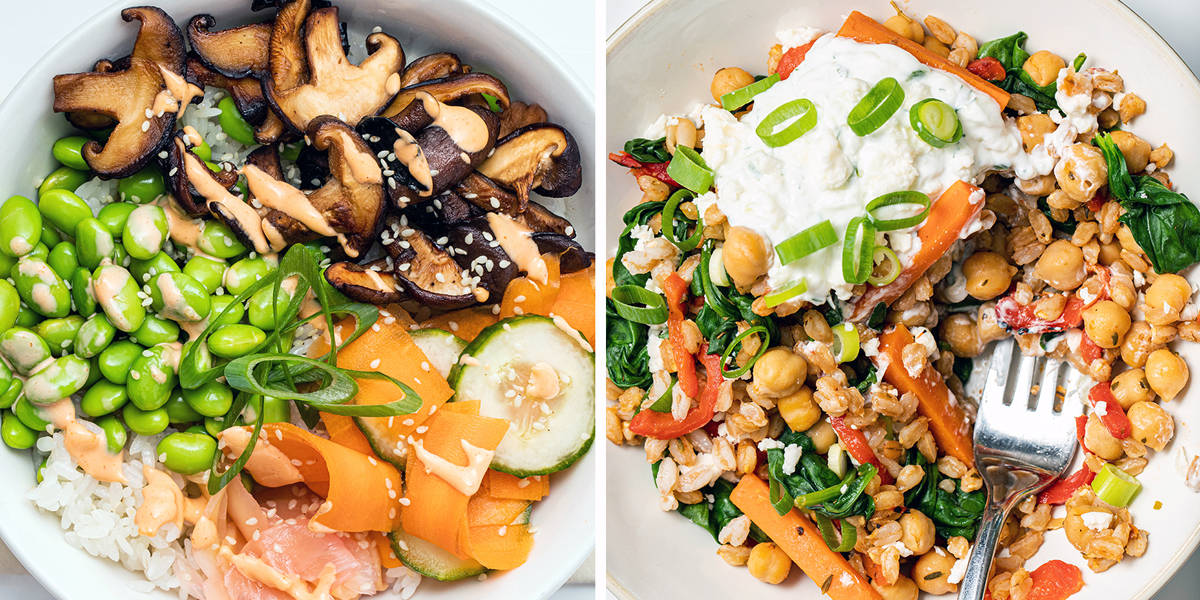




No comments:
Post a Comment