| After two mass shootings within two weeks, Americans are desperate for answers on how to stop the killings. Hundreds of Washington Post readers submitted questions on this topic during a live chat The Post held Tuesday with four reporters: enterprise reporter John Woodrow Cox, White House reporter Seung Min Kim, investigative data editor Steven Rich and me, Amber Phillips. Here are some questions and answers from the chat I thought you'd find interesting, edited for length. The full Q&A is here. Q: Why doesn't our media publish trauma photos of deceased school shooting victims? Cox: It's a good question. Traditionally, the media does not publish graphic images (whether they're shooting victims or not). Whether it would change public thinking about high-powered rifles, or gun violence in general, is difficult to know, but what I can say: Americans do not understand what these weapons do to children's bodies. They destroy them. That's not hyperbole. Any conversation on this topic should begin with the families who lost loved ones. I do know that some families have said they want those images shared, but many others do not. 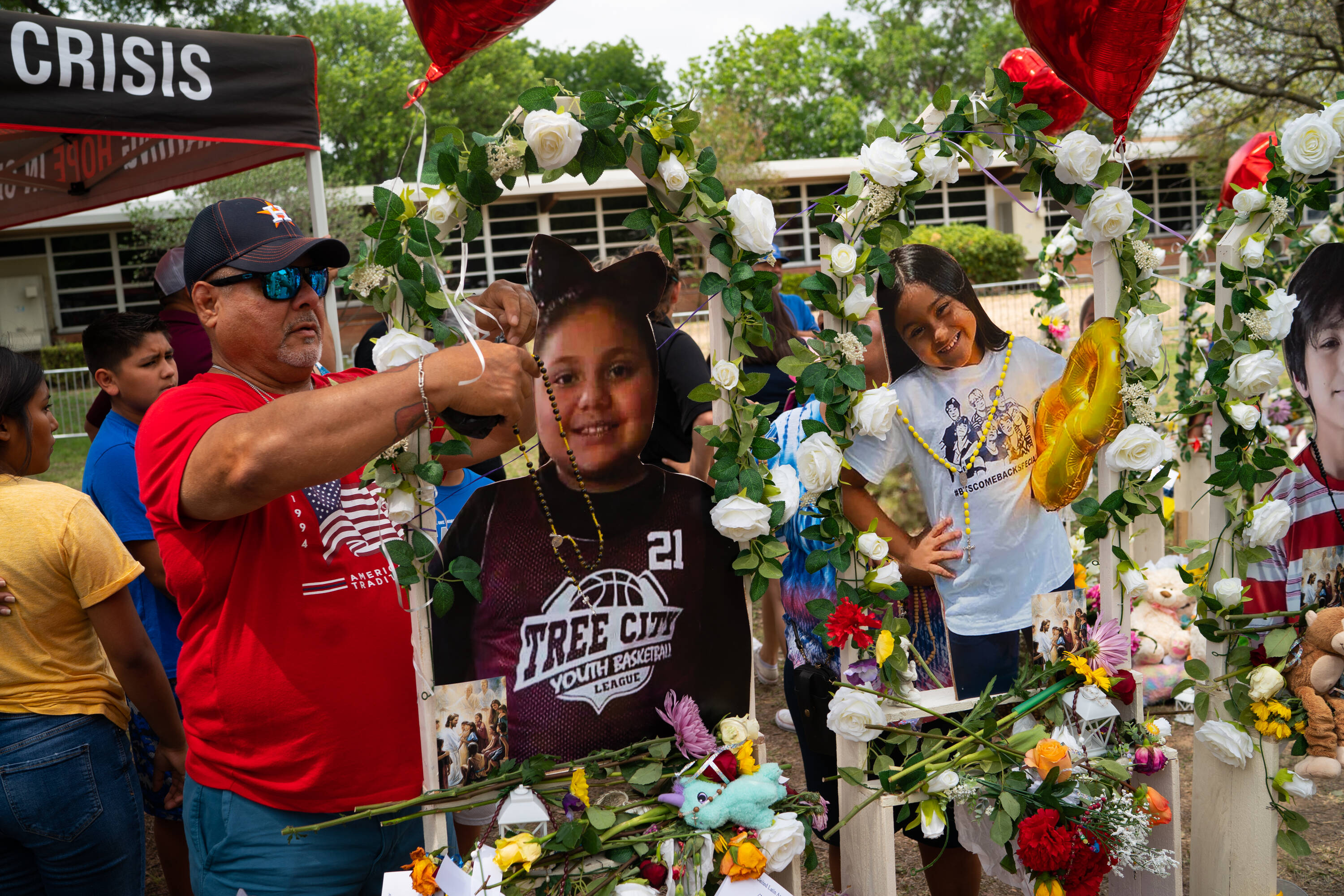 Outside Ross Elementary in Uvalde, Tex., on Monday. (Sarah L. Voisin/The Washington Post) | Q: What is the breakdown of gun deaths? Rich: We know a lot about gun deaths and yet not enough. In 2020, according to CDC mortality data, there were more than 19,000 gun homicides and 24,000 gun suicides. There were also more than 500 accidental gun deaths. The data on gun homicides by law enforcement is about 600, which we know to be an undercount as we counted more than 1,000 that year. Q: Has there been any consideration to ban combat or semiautomatic weapons as we did in 1994? Kim: There hasn't been a serious attempt to enact a federal assault weapons ban in Congress since it expired back in 2004. The appetite just hasn't been there for one, and even Democrats who are the most ardent proponents of stricter gun regulations have said as such. Q: Can we improve school security measures? … Why have schools not adopted metal detectors, screening of personal effects, and surveillance of those entering? Cox: Schools where shootings have occurred have done all these things, and much more, but there is no fail-safe. The truth is that a person determined to get a gun inside a school can almost always do it. Here's a passage from my book, "Children Under Fire: An American Crisis," that helps put it in context: "'You want to rationalize in your mind that you could have stopped it or something could have been done,' said Randy Russell, the superintendent [in a rural Washington state district where a school shooting occurred despite security measures]. 'There's just nothing, outside of a crystal ball, that would have allowed us to know this was going to happen. ... We don't control as much as we think we do.'" 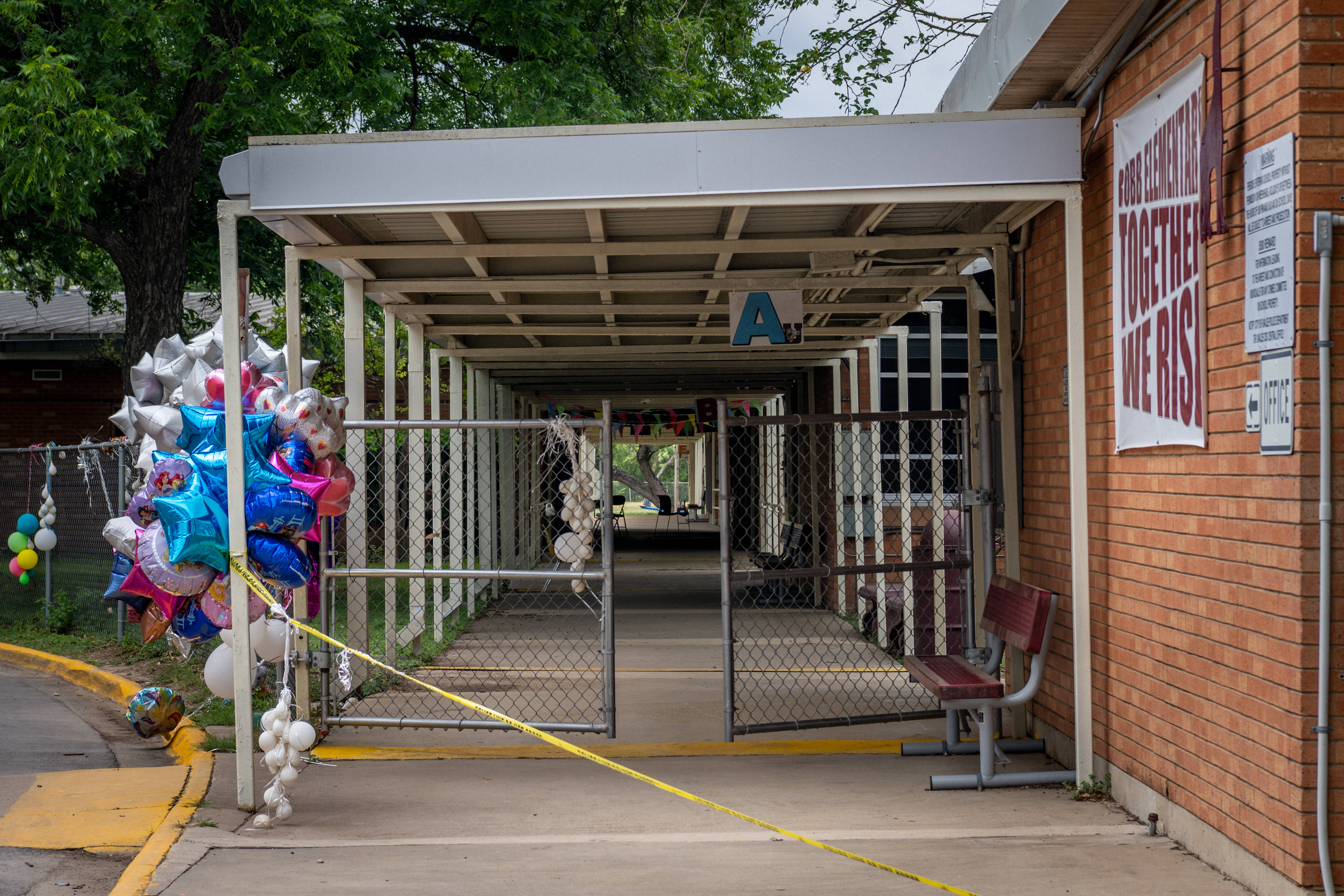 Robb Elementary on Tuesday. (Brandon Bell/Getty Images) | Q: Could Congress regulate body armor? Kim: In theory, they could. Here is one example from 2019, when Rep. Grace Meng (D-N.Y.) introduced a bill — backed by several progressives in the House Democratic ranks — to ban the purchase or use of "enhanced body armor" by civilians. But it went nowhere, and banning body armor hasn't come up in serious negotiations over gun laws in recent years. Q: What makes the USA different from Australia or Japan in terms of being able to prevent gun violence? Cox: I'm going to pull a passage from my book, "Children Under Fire" to answer this: "The difference between America and those places isn't crime or race, class or culture, all of which has been argued before. Exorbitantly more people are killed by guns here because we have exorbitantly more guns — nearly 400 million, by one estimate — and laws that are less effective at regulating them. Researchers have consistently found that America's rates of other serious crimes, including assault and robbery, are comparable with those in other rich countries. Only on the issue of gun violence are we exceptional." Q: What are the prospects for a clarifying rewording of the Second Amendment … that might appeal to the broad middle of Americans? Phillips: For most of American history, the amendment was understood to concern the use of guns in connection with militia service. The Founding Fathers were likely focused on regulating state militias from being disarmed, not to protect individual rights to keep guns for self-defense, Joseph Blocher, who specializes in the Second Amendment at Duke University's law school, told me. But the Supreme Court started reinterpreting the Second Amendment in 2008 with District of Columbia vs. Heller, when conservatives ruled the Constitution protects the right for an individual to own a gun in the home. And the Supreme Court could soon drastically expand the right to carry guns in public — and the understanding of the Second Amendment. Q: What can ordinary citizens do that will actually make a difference? Feeling helpless. Cox: You're not alone. Lots of people feel both helpless and hopeless about gun violence in America, but there are some things you can do that would make a real difference, and I'll highlight one: If you own a gun, lock it up and keep it a separate from the ammunition. If you know someone who owns a gun, be brave, and ask them to do the same. | 



 Email
Email


No comments:
Post a Comment